How To Build The Ultimate Baseball Strength And Conditioning Program
Reading Time: 11 minutes


Reading Time: 11 minutes
Building a strong baseball strength and conditioning program lays the groundwork for real success on the field. You need more than skill to compete. You need a body ready for explosive movement, quick reactions, and lasting endurance.
A well-designed training program helps you stay stronger, move faster, and play at your best from the first inning to the last.
This guide takes you through the steps baseball coaches use to develop balanced training plans that fit every position. You’ll learn how to create a program that builds both lower and upper body strength, improves arm care, and supports your team’s unique demands.
Whether you coach a college team or train individual players, you’ll see how to structure workouts, schedule weekly sessions, and use tools like GoRout Diamond to improve performance and teamwork.
The Basics of Baseball Strength And Conditioning Program
Baseball demands quick bursts of power, sharp recovery, and consistent performance over long seasons.
You rely on short, explosive movements, like sprinting to first base or throwing a pitch, which require training that targets strength, speed, and endurance differently than longer endurance sports.
A good program helps you move faster, throw harder, and stay safe from the most common injuries.
How strength correlates to performance
Strength is the foundation because it supports every movement on the field. The stronger your lower body, the more force you generate when hitting or running. Your core strength keeps you stable during swings and pitches, improving both power and control.
Many players focus too much on skills and neglect physical development. Amateur training often skips the balance between upper- and lower-body work or leaves out mobility and conditioning.
It can lead to fatigue, slower reaction times, and poor recovery. Here’s a simple breakdown of focus areas:
| Training Area | Purpose | Example Exercises |
| Strength | Build power and stability | Squats, Deadlifts, Bench Press |
| Speed & Agility | Improve quickness and reaction | Sprint Drills, Ladder Work |
| Conditioning | Increase endurance and recovery | Tempo Runs, Circuit Training |
| Mobility/Flexibility | Prevent injury and improve range | Foam Rolling, Dynamic Stretching |
Components Of A Baseball Strength And Conditioning Program
A sound baseball strength and conditioning program helps you perform better, stay healthy, and recover faster. It blends strength training, mobility work, and sport-specific training to help you build the right mix of power and control on the field.
Using analytics in baseball can also help measure progress and make smarter adjustments to your training plan.
Mobility and warm-up fundamentals get your muscles and joints ready for activity and movements. Dynamic stretches, shoulder bands, and light resistance training are common warm-up tools for baseball athletes.
This phase keeps your body loose and improves the range of motion and joint health.
Strength-building phases develop core, lower-body, and upper-body strength through weight training and resistance exercises. Squats, deadlifts, and rows build maximal strength that supports your swing, sprint, and throw.
A strength and conditioning coach can adjust resistance and reps based on your performance level and season phase.
Power and explosive training turn strength into usable speed and quickness. Medicine ball throws, sprints, and plyometrics improve first-step acceleration and hitting force.
Many athletes now use AI in baseball and smart baseball training tools to track how efficiently they produce power during these workouts.
Position-Specific Needs For Baseball Teams
Every position on a baseball team has unique physical needs. Whether you coach college baseball, youth athletes, or work in professional baseball, your players need to train with their position in mind.
Pitchers rely heavily on arm health, shoulder stability, and core rotation. You can design throwing programs that combine light resistance work, mobility drills, and controlled workload tracking.
Using baseball pitching tools helps measure throwing efficiency and reduces stress on the arm through precise feedback.
Position players such as infielders and outfielders need a mix of lateral speed, sprint endurance, and reaction strength. Drills like cone sprints or medicine ball throws improve rotational power and quickness.
Data tools like a baseball analysis app give you real-time baseball performance insight, letting you make better conditioning choices for each athlete.
Catchers face different demands. They squat repeatedly, handle quick throws, and take on heavy workloads behind the plate.
Strength programs should emphasize hip flexibility, core endurance, and lower back stability. Pairing targeted movements with a baseball wristband playbook can help amateur and professional coaches streamline defensive signals during practices.
Lower Body Strength And Conditioning In Baseball
Strong legs drive nearly every movement in baseball. You use them to generate speed when sprinting, stability when throwing, and explosive force when swinging.
Building lower-body strength helps you transfer force efficiently through the sagittal plane and into game actions like hitting and fielding.
Essential lifts and progressions
Focus on compound lifts that build a solid base. Exercises such as goblet squats, reverse lunges, and power cleans teach your body to produce and control force development.
These moves train your legs and hips to work together for power development that translates to real performance. Start with bodyweight versions and move to loaded lifts as your strength improves.
Speed and sprint mechanics
Lower-body strength powers your first step and stride. Use drills that train you to push the ground away and keep good sprint posture.
Short sprints, sled pushes, and resisted runs help you move faster without losing balance. A strong core supports each drive of the leg, keeping your movements efficient.
Plyometric development
Add plyometric training to turn strength into quickness. Box jumps, broad jumps, and medicine ball work aid your ability to develop power rapidly.
You can pair medicine ball rotational throws with push-ups or squats to train coordination and increase rotational strength, helping your body produce explosive swings and throws.
Upper Body And Arm Care In Baseball
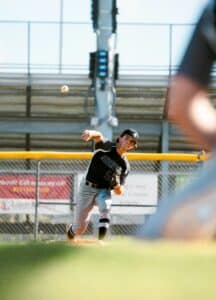
Strong upper body training helps you hit harder, throw faster, and stay healthy all season. As an overhead athlete, you rely on your shoulders, back, and core to generate rotational power and control.
Balancing strength with mobility keeps you performing well while avoiding injuries that often come from overuse.
Safe upper-body lifting practices
Focus on controlled movements instead of chasing heavy weights without good form. Combine pressing and pulling exercises to strengthen your chest, upper back, and shoulders evenly.
Keep your elbows slightly bent and avoid painful overhead positions. Here’s a simple guide for balanced workouts:
| Movement Type | Example Exercise | Key Tip |
| Push | Dumbbell bench press | Keep shoulder blades retracted |
| Pull | Cable face pull | Lead with elbows, not hands |
| Rotation | Landmine press | Engage your core for control |
Rotator cuff and scapular stability
Your rotator cuff and scapula are vital for shoulder health and throwing velocity. Perform light rotator cuff exercises with bands or small weights several times a week.
Add moves like internal and external rotations or “T” raises to improve stability. Strengthening the scapular muscles helps you control arm motion during pitching and fielding, reducing the risk of common injuries like shoulder impingement.
Recovery and workload monitoring
Mobility work and foam rolling should follow every throwing or lifting session. Use them to release tight areas and promote blood flow.
Keep track of how much you throw, your rest days, and any soreness. Noticing small aches early and adjusting how hard you train can help protect your arm and prevent injuries over time.
Conditioning For Baseball
Baseball relies more on short bursts of effort than steady, long-distance running. You need quick acceleration when you sprint to first base or chase a fly ball, not the same stamina required for distance running.
That’s why training your sprint speed and recovery between efforts helps more than logging slow miles. Use drills like timed 30-yard sprints or broad jumps to measure and improve your explosive power.
Tracking progress through simple metrics, or college baseball analytics for collegiate programs, can help you spot weak areas and make training more efficient.
Base-running conditioning drills
During a long season, repetitive base-running demands both speed and control. Interval sprints that mimic base running, like going from home to second, resting, then repeating, build endurance while keeping the movement similar to real gameplay.
Try adding stop-and-start sprint work or timed home-to-first runs. These improve your ability to accelerate, decelerate, and recover quickly.
Short rest breaks between sprints help build the speed and endurance needed to stay fast through multiple innings.
Pitcher-specific conditioning
Pitchers need a different type of conditioning. Instead of long cardio sessions, they benefit more from short, controlled bursts and exercises that build rotational strength and stamina.
Drills may include medicine ball throws or short sprint intervals between throws to simulate game tempo. Light jogging or band work between sets can keep endurance up without overloading the arm.
Pitchers can still use longer cardio sessions, but mainly for recovery after outings, not as their primary form of conditioning.
Keeping conditioning sport-specific helps you stay strong and consistent throughout the season.
Sample Program And Weekly Layout

Building your baseball strength and conditioning plan takes some real balance. You want enough intensity to build power, but you also need recovery time to stay fresh for games.
Your yearly plan should shift between the off-season and in-season depending on how often you’re practising and playing.
In the off-season, focus hard on strength and power. Hit the gym 4 days a week: two heavy lifting days, two days for speed and conditioning.
Go for full-body movements like squats, lunges, bench presses, and medicine ball throws. Toss in short sprints or sled pushes to work on explosiveness.
| Day | Focus | Example Work |
| Mon | Lower Body Strength | Squats, Lunges, Core |
| Tue | Speed & Conditioning | Sprints, Agility Drills |
| Thu | Upper Body Strength | Presses, Pulls, Rotations |
| Fri | Power & Mobility | Jumps, Med Ball Slams, Stretching |
Once in-season hits, dial back the volume and keep intensity under control. Lift just 2–3 times per week using total-body circuits.
Put recovery, mobility, and short conditioning first so you stay sharp and avoid fatigue. It’s smart to track your training and game workload. That way, you can manage fatigue over those long stretches.
| Day | Focus | Example Work |
| Mon | Recovery + Light Lift | Bodyweight Circuits, Core |
| Wed | Strength Maintenance | Moderate Lifts, Rotational Work |
| Fri | Quick Conditioning | Sprints or Low-Impact Circuits |
Try to progress gradually, not all at once. Add weight or a couple reps each week in the off-season, then keep those gains steady during the season.
That’s how you stay strong, fast, and durable all year.
How GoRout Diamond Improves Your Baseball Program
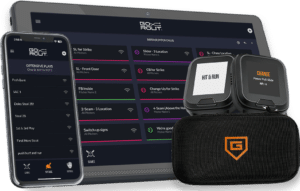
GoRout Diamond is a baseball pitch-calling system that supports live action. It means you can call pitches in real-time, safely and securely, replicating the speed and pressure of real game situations.
Pitchers and catchers receive calls without visible signs, keeping the pace of play fast and uninterrupted.
This fast game-speed communication keeps players focused. There’s zero downtime, no confusion, and no need to reset between pitches.
Teams stay in rhythm throughout innings, making it especially valuable in a close game or a high-stakes moment.
Consistent communication

When things get tough in live games, even the slightest communication breakdown can blow a pitch or a play. GoRout Diamond helps you avoid this problem entirely.
It makes sure everyone’s on the same page from call to call, quick and simple. Coaches send the signal, catchers get the clear directive, and pitchers throw the appropriate pitch.
Because it’s consistent, you can reduce the need for those mound visits or mid-inning tweaks. Keep your defensive focus sharp, and avoid distractions in critical sequences.
Secure signalling
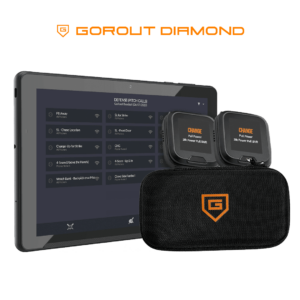
Sign stealing is a major issue at the top levels of the game. GoRout Diamond solves the problem by swapping out traditional hand signals for encrypted digital communication.
The call is private and completely invisible to the opponents. It lets you make your game plan without worrying that your rivals will crack the code.
It gives you the confidence to change up your pitch sequence, make in-game adjustments, and do it all without changing up your system or slowing the game down.
Coach-control that doesn’t slow you down
GoRout Diamond lets you make the calls on in-game decisions, without ever slowing the game down. Your tempo, pitch selection, and game plan all work seamlessly into the game itself.
You can make better decisions during long innings or high-pressure moments. You stay connected without calling a timeout, stepping onto the field, or slowing the game down.
More focus and confidence
When communication is easy and reliable, players perform faster and with more confidence. They trust the call, the catcher knows what they’re doing, and the rest of the team stays locked in, knowing the play is clear.
By cutting out uncertainty, GoRout Diamond helps teams nail the play for the entire game.
Get a quote today.
How GoRout Connect Expands Your On-Field Communication

GoRout Connect is the next step in the GoRout platform, a unified operating system for live on-field communication. Instead of replacing existing workflows, GoRout Connect builds on them.
Coaches continue to call plays the same way they always have, while communication becomes faster, clearer, and more efficient in real time. It allows teams to maintain game flow without added steps or distractions.
Works with the tools you already use
One of the biggest benefits of GoRout Connect is how quickly it integrates with third-party tools. Connecting directly with platforms you already use improves efficiency without changing your game-day process.
You get more value from your technology without adding complexity in the dugout or on the field.
Built-in analytics with AWRE Sports
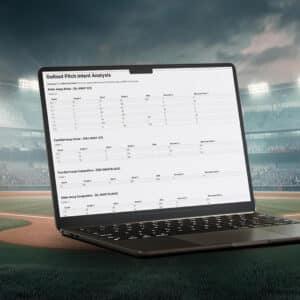
Through GoRout Connect, GoRout Diamond integrates directly with the AWRE Sports Advanced Charting app. Coaches call pitches using GoRout Diamond as usual, while games are automatically charted in the background.
It gives you instant access to advanced analytics, including strike zone maps, spray charts, pitch intent versus result, and count-specific execution, without extra work during the game.
Automated post-game insights
After every game, execution analysis is done automatically. Coaches receive clear post-game reports in their inbox, so there’s no need to collect or organize data manually.
These insights show how pitches were intended versus how they were executed, making it easier to spot patterns, strengths, and areas to improve before the next bullpen session or matchup.
Built for modern game play
GoRout Diamond and GoRout Connect let modern baseball teams communicate better, execute more consistently, and learn from every game. Teams stay connected and play faster without changing how coaches coach or disrupting the flow of competition.
Get a quote today.
Conclusion About Baseball Strength And Conditioning Program
Building a strong baseball strength and conditioning program gives you the foundation to perform at your best. You’ve learned how strength, mobility, and power work together to improve speed on the field, power at the plate, and durability over a long season.
A smart program moves through off-season, pre-season, and in-season phases, each with a clear focus. The off-season builds muscle and strength. The pre-season develops speed and explosiveness. The in-season helps you maintain energy and reduce fatigue while staying game-ready.
Here’s a quick look at what matters most:
| Phase | Main Goals | Key Focus |
| Off-Season | Build size and strength | Heavy lifts, mobility, and recovery |
| Pre-Season | Convert strength to power | Explosive drills, sprint work, lighter loads |
| In-Season | Maintain performance | Controlled volume, injury prevention, active rest |
Your program should fit your position, age, and training level. Using tools like GoRout Diamond can help you track progress, monitor velocity, and keep your training efficient.
When you’re ready to take the next step, reach out to get a quote and build a custom plan that matches your goals and schedule.
FAQs About Baseball Strength And Conditioning Program
What is the best workout program for baseball players?
The best program builds power, speed, and mobility without burning you out. Concentrate on compound lifts like squats, deadlifts, and presses for strength.
Add explosive drills (sprints, medicine ball throws) to boost quickness and hitting power. Mix in mobility and flexibility work to keep your body moving well and cut down on injuries.
What is the 3 3 3 rule for working out?
The 3 3 3 rule usually means doing three sets of three exercises for three rounds or training three days per week to allow recovery. It keeps things simple and manageable while you build strength and endurance.
Use moderate weights and good form for steady progress. Don’t overthink it. Just stay consistent.
What is the 5 3 1 strength and conditioning program?
The 5/3/1 program is a popular strength program that uses four main lifts: squat, bench press, deadlift, and overhead press.
Each week, you hit these lifts at 85–95% of your max, using rep ranges of 5, 3, and 1. It’s great for steady strength gains without frying your body between baseball practices and games.
How far should a 13-year-old be hitting a baseball?
A typical 13-year-old might expect to hit the ball anywhere from 150 to 225 feet. That range depends a lot on strength, swing mechanics, and just how much experience they’ve got.
With solid training in core strength, bat speed, and coordination, distance usually gets better over time. It’s better to focus on skill development and safe progress, not just chasing a certain number.
Share This Article
Related Articles


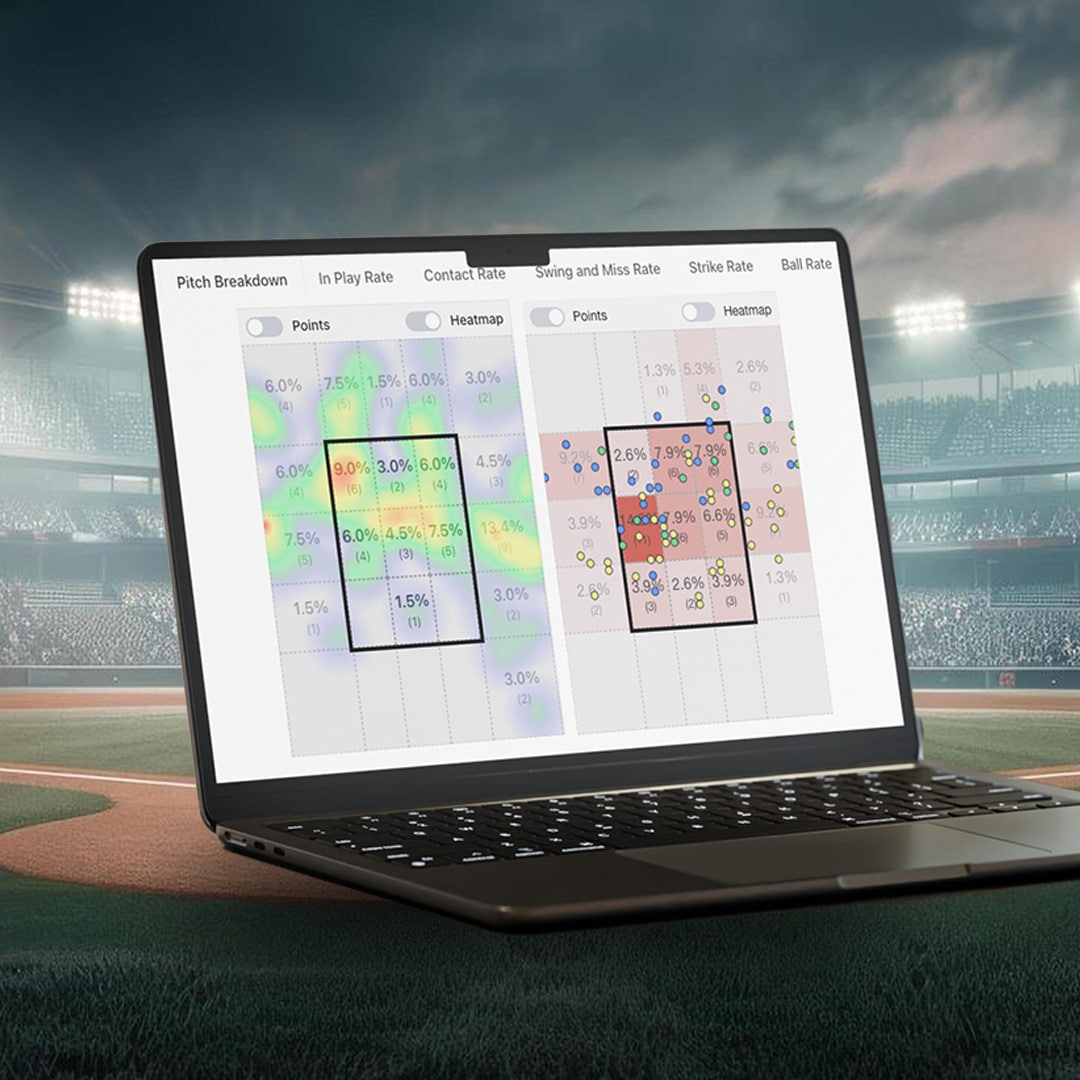
Big-League Analytics in your dugout for free
With GoRout Connect, GoRout Diamond customers receive access to AWRE Sports suite of analytics tools for free!