Five Tools in Baseball: How to Become a 5 Tool Player
Reading Time: 13 minutes


Reading Time: 13 minutes
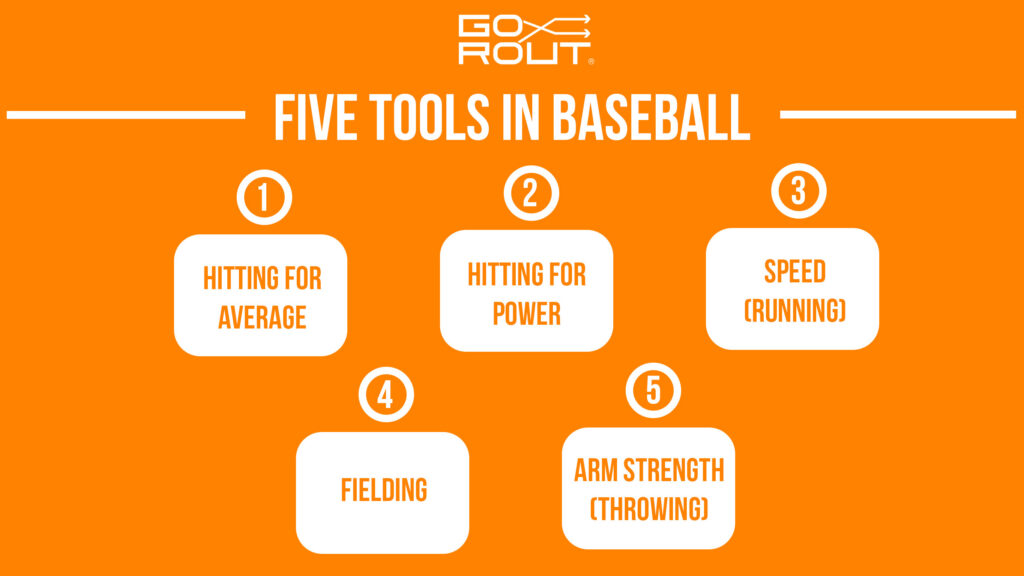
The five tools in baseball are five specific skillsets in various components of the game that determine a well-rounded, complete player. Five-tool players are elite offensive and defensive players with extraordinary speed and arm strength.
A five-tool player can change the trajectory of a baseball team, with the ability to impact games singlehandedly. Teams that develop multiple five-tool players as teammates make game planning a nightmare for opponents.
Specific criteria that determines a five-tool player varies by age, skill level, and league. A player may possess an elite and well-rounded skillset as a ten-year-old, but not progress in all facets as they grow older. To be one of the best five-tool players in the MLB and well-rounded at the big league level requires world-class talent in all five skillsets.
This resource serves as an ultimate guide to the five tools in baseball, with everything you need to know to understand the concept and its application to the game. Continue reading to learn:
- What the five tools in baseball are
- What a five-tool baseball player is
- How to evaluate the five baseball tools
- Why the five tools in baseball are important
- How to train to become a five-tool player
- Examples of five-tool players in MLB history
- FAQs about the five tools in baseball
What Are The Five Tools in Baseball?
Five tools in baseball refers to the essential skills that define a complete, well-rounded player. When someone refers to a tool in baseball, they’re talking about a specific skill. The application of each skill used to determine a five-tool player varies by position, though they cover all phases of the game regardless.
The five tools of baseball are:
- Speed (running)
- Hitting for average
- Hitting for power
- Fielding, and
- Arm strength (Throwing)
Speed (Running)
Speed is a baseball tool that defines a player’s running ability and quickness. It’s measured by two distinct qualities: acceleration and sprint speed:
- Acceleration is how quick a player increases their speed, or the rate of change of their running velocity.
- Sprint speed is how fast a player runs at their peak, measured by the feet per second in a player’s fastest one-second window.

Image courtesy of Gurdass Malik on Unsplash
To check the speed/running box on baseball’s tool list, a player needs explosiveness and pure foot speed. They need the ability to go from zero to one-hundred in as little time as possible, change direction on a dime, and reach/maintain elite maximum running velocity.
Speed is a game-changer in baseball, allowing players to steal bases, stretch singles into doubles (and doubles into triples), and cover ground in the outfield. It’s an asset in every aspect of the game, helping create pressure on the defense and allowing players to track down fly balls or grounders.
Speed is crucial for both offense and defense in baseball. Running speed allows for offensive achievements like stolen bases and taking extra bases on hits, as well as increasing a player’s defensive range.
Hitting for Average
Hitting for average refers to a player’s ability to consistently make contact and get on base. It’s one component of a player’s offensive makeup and a tool coaches rely on for consistency at the plate. Strong contact hitters hit safely at a consistent rate and possess high batting averages.

Certain characteristics and qualities enable players to hit for average, like :
- Plate awareness and discipline. An acute knowledge of the strike zone helps hitters lay off pitches outside the zone, reducing weak contact and swinging strikes. By not chasing bad pitches and locking in on hittable ones, plate awareness and discipline lead to more quality at-bats.
- Strong plate coverage. Contact hitters put the ball in play to all parts of the field. They have quick enough hands to turn on an inside pitch, yet the patience and control to sit back and drive outside pitches the other way.
- An aggressive mindset and approach. Batters looking to attack the right pitch avoid backing themselves into a corner. Strong contact hitters capitalize on aggressive pitchers who attack the strike zone early and timid ones throwing get-me-over fastballs. Opportunistic doesn’t mean recklessness at the plate. An aggressive offensive approach anticipates hittable pitches in a player’s preferred location while resisting anything that may lead to weak contact, ball or strike.
- The ability to protect with two strikes. When batters fall behind in the count, those who hit for contact protect without chasing. By shortening up and swinging at anything close, without chasing bad pitches, they improve their chances of extending the at-bat for a better pitch or making solid enough contact for a base hit.
Hitting for Power
Power hitting is a baseball tool defined by how hard and far a player can hit the ball consistently. Hitting for power allows players to drive the ball and hit home runs, making them a constant threat at the plate. It’s another component of an offensive player’s makeup, one that has the power to change the game in a single swing.
Power hitters have strength and explosiveness, solid mechanics, fast bat speed, high exit velocities, and optimal launch angle ranges. They’re built through a combination of strength training, proper form, aggressive approach, and plate coverage. To hit for power, players must be able to do so to all parts of the field.
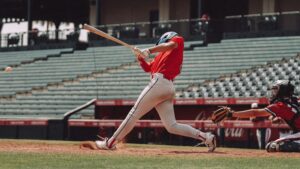
While there’s a tendency to equate hitting for power with home run ability, a power hitter does more for their team than put the ball over the fence.
- They can be consistent threats for doubles and triples, forcing opposing outfields to play back and cover more ground.
- With a runner on third base, power hitters can reliably hit the ball deep enough for sacrifice flies.
Fielding
Fielding refers to a player’s defensive ability, including:
- Footwork
- Reaction time
- Glove work, and
- Throwing accuracy
Great fielding can save runs and change the outcome of a game, and five-tool players have excellent glove skills and range. It’s the primary baseball tool that assesses a player’s capability at their position on the field.
Fielding is essential for preventing runs and making difficult plays look routine. Because of the different positions involved, fielding is the baseball tool with most variance in how it’s assessed/measured.
- For a short stop, strong fielding is exemplified by range more so than a third-baseman or first-baseman.
- A first baseman with great fielding ability might be better at scooping short hop throws, and have quick reaction and flexibility for errant throws.
Regardless, the core components listed above apply to all positions in some capacity.
Arm Strength (Throwing)
Arm strength and throwing ability is a core defensive baseball tool. It’s pretty self-explanatory, measuring the strength of a player’s arm by their throwing velocity and range.
- Velocity is the maximum speed of a thrown ball, from release point until it reaches its target.
- Range is how far a player can throw a ball
Players with strong arms can make difficult plays and be more versatile in the field. Like fielding, arm strength (and the benefits of having a strong arm) look different depending on a player’s position.
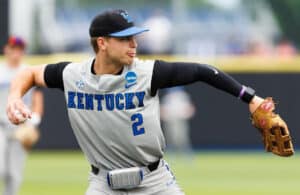
A strong and accurate throwing arm is crucial for every position on the field, allowing players to make difficult plays and cut down baserunners.
Let’s take a look at the role of arm strength by position group:
| Position Group | Role of Arm Strength |
| Outfield | As an outfielder, arm strength is important for making long throws and cutting down baserunners. |
| Infield | For infielders, a strong, accurate arm is essential for a five-tool player, allowing them to make long throws and execute double plays with ease.
|
| Catcher | Catchers need arm strength for explosive throws to catch baserunners trying to steal, or throwing behind runners after the pitch. |
| Pitcher | Arm strength is essential for pitchers to overpower hitters with an effective fastball. |
What Is A Five Tool Baseball Player?
A five-tool player excels in five key areas of baseball:
- Hitting for average
- Hitting for power
- Running
- Fielding, and
- Throwing
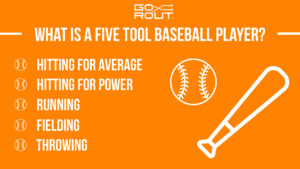
Five-tool players are considered the golden ideal of a baseball player. Because they’re well-rounded and elite in all facets of the game, having a five-tool player on your team means you have someone who can impact the game in multiple ways.
The Impact of Five-Tool Players
Five-tool players are rare and highly sought after because they can do it all on the field. Having a five-tool player on a team brings versatility and excitement to the game.
Let’s take a look at how each tool directly impacts the game:
| Tool | Impact |
Hitting for average |
|
Hitting for power |
|
Running |
|
Fielding |
|
Throwing |
|
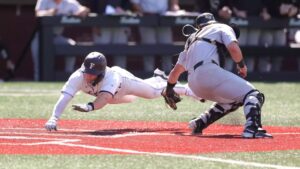
How Are The Five Baseball Tools Evaluated?
Five-tool players are rare and highly sought after in baseball. Scouts evaluate players based on five key tools:
- Hitting for average
- Hitting for power
- Speed
- Arm strength, and
- Fielding
Players who possess high-level proficiency in all five tools are considered rare and valuable. Scouts evaluate these tools using a 20-80 grading system, where 50 is the major league average and 80 is elite. As they watch, they rank a player’s five tools.
Each scout or coach may use a different criteria to determine their evaluation of a specific skill.
- Running is typically determined by sixty-yard dash times
- Fielding assessments include footwork, arm action, form, control, and other factors
- Arm strength is typically measured by maximum velocity and distance, and accuracy is often taken into account
- Hitting for contact is evaluated through solid contact consistency, swing technique, plate discipline, and a feel for the strike zone
- Power hitting assessments include exit velocity, launch angle, distance, swing technique, and general strength.
The Importance of Baseball’s Five Tools
Why is it important for coaches to know the five tools of baseball?
Coaches must know baseball’s five tools so they can scout and identify game changing players. Five-tool players can singlehandedly change the makeup of a team and outlook of a season. It’s essential that coaches understand the five tools, but more importantly, how to evaluate them.
It’s also important they understand how to grow five-tool players. Especially at younger age groups and skill levels, kids new to playing baseball may develop into complete players in their league by the middle of the season. Much of that growth and progression depends on a coach’s knowledge of the five tools and training to build them.
Why is it important for players to know the five tools of baseball?
Players must know baseball’s five tools so they can train to become elite, impactful players sought out by coaches and scouts. In their everyday roles, five-tool players utilize their skillset to help their team win games.
On a personal level, especially players striving to play at the next level, understanding the five tools sets you up for success in baseball recruiting. By developing elite abilities in key components of the game, knowledge and practice of the five tools in baseball helps you and your team.
How Do You Train to Become A Five Tool Player in Baseball?
To become a five-tool player in baseball, you need to train extensively in the five components that determine complete players:
- Hitting for average
- Hitting for power
- Running
- Fielding
- Throwing
Training to hit for average
To train for hitting for average, players should focus on hand-eye coordination and making contact against different pitchers. Proper mechanics, focused drills, a smart mindset, and high baseball IQ all play a role in becoming an elite contact hitter.
Hitting drills to practice include:
- Live batting practice
- Soft toss
- Tee drills
- Pitch recognition and tracking
- Small ball
Training to hit for power
To train for hitting for power, players need to generate high bat speed and leverage to consistently hit the ball hard. Strength training, focused drills, an aggressive approach, and attention to power-specific swing technique create high-impact power hitters.
Drills to practice include:
- Bat speed drills
- Launch angle work
- Barrel control and exit velocity training
- General strength training and lifting

Training for running
To train for running, speed and agility drills are essential. Base running practice, as a team and individually, helps as well.
Specific drills and exercises to work include:
- Plyometrics
- Reading pitchers and getting good jumps
- Sprints and ladder drills
- Form and technique development
Training for fielding
Fielding training involves learning proper technique and consistent practice through skill-specific drills and game-like scenarios.
Drills to work to build your fielding tools include:
- Position-specific fielding drills
- General fielding fundamentals and technique
- Glove control
- Reaction training
- Footwork and proper positioning
Training for arm strength
Building arm strength through proper form and throwing progressions leads to elite throwing abilities.
Specific programs and progressions include:
- A long toss program
- Weighted ball progressions
- Resistance band work
- Throwing mechanics and technique
- General strength training
Other Tips for Building the Five Baseball Tools
To become a five-tool player, players should train with a plan, focusing on weaknesses while improving strengths. Regular, disciplined practice and training lead to long-term improvement in baseball skills.
Competing against high-level opponents pushes players to improve and exposes areas where they need to get better.
Using technology and analytics can help players track key metrics to measure progress and adjust training.
As a coaching, structuring your baseball practice to focus on each of the five tools helps players improve overall.

Who Are Examples of Five-Tool Players in MLB History?
Major League Baseball (MLB) is the world’s highest level of competitive baseball. Players who make it to the MLB are the best of the best. Even so, over the past 20 years, there have only been a few complete five-tool players in Major League Baseball.
Willie Mays
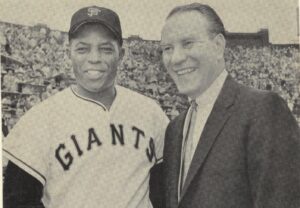
Image courtesy of The New York Public Library (Digital Collections)
Willie Mays is considered one of the legendary five-tool players in MLB history, dating back well beyond the past 20 years. Mays, a Hall-of-Famer, two-time Most Valuable Player, and 24-time All-Star, was elite in the field and at the plate.
As a hitter, Mays, nicknamed the “say hey kid”, displayed power with the sixth most career home runs and extra base hits in MLB history. He also hit for contact, with a career batting average over .300, and the 13th most hits and 4th most total bases in league history.
In the field and as a baserunner, Mays performed at a historic level. He led the league in stolen base percentage five times, ranks sixth in fewest errors as a center fielder all-time, and holds the record for most putouts of any outfielder to ever play in the MLB.
Mays’ over-the-shoulder bucket grab in center field during the 1954 World Series, coined “The Catch”, is possibly the best example of his abilities. A display of Mays’ greatness as one of the league’s elite defenders, baseball historian Jacob Kornhauser ranked it 24th in his 100 Moments That Shaped Baseball History.
Ken Griffey Jr.
Ken Griffey Jr. is another iconic five-tool player who excelled in all five areas of the game. Introduced to a professional work ethic at a young age as the son of MLB player Ken Griffey, Griffey Jr. is recognized for his legendary swing and elite speed, alongside Gold Glove defense.
A ten-time Gold Glove and seven-time Silver Slugger award winner, Griffey Jr.’s five-tool skillset led to a 13-time All-Star, Hall of Fame career. In a career concluded just over 20 years ago, Griffey Jr. made his mark in the MLB offensively, defensively, and on the basepaths.
Hitting for power, Griffey Jr. sits one spot behind Willie Mays at seventh all-time in home runs and ranks eighth all-time in extra base hits. Exemplifying contact and speed on the basepaths, he sits 16th in career total bases and had two seasons in the top ten of stolen base percentages.
In the field, Griffey Jr. ranks ninth all-time in putouts as an outfielder.
Mike Trout
Mike Trout is regarded as the modern standard for the five-tool archetype, excelling in offense, defense, and base running. In his 15-year career thus far, the future Hall of Famer has collected a Rookie of the Year award, nine Silver Sluggers, 11 All-Star selections, and three Most Valuable Player awards.
Hitting for both power and contact, Trout holds the sixth highest batting average and has the second most home runs of all active MLB players. He has the ninth most stolen bases of all active players and the second most putouts of all outfielders, exemplifying his speed and fielding abilities.
Other Notable Five-Tool Players
Notable players such as Mookie Betts and Ronald Acuña Jr. consistently demonstrate elite proficiency across all five categories.
Mookie Betts is recognized as a modern five-tool player in MLB, with the following career accolades:
- Most Valuable Player (2018)
- Batting Title (2018)
- Wilson Overall Defensive Player of the Year (2016)
- 7-time Silver Slugger
- 6-time Gold Glove
- 8-time All-Star
- 4-time World Series Champion
Ronald Acuña Jr. showcased elite power-speed combinations, becoming the first player to achieve a “50/40” season and later a “40/70” season.
His five-tool skillset has earned him Rookie of the Year and Most Valuable Player awards, three Silver Sluggers, and five All-Star selections in his eight-year career thus far. Though he tore his ACL and missed the postseason, Acuña Jr.’s regular season contributions helped his Atlanta Braves win the 2021 World Series.
Talented players that don’t meet the five-tool criteria
Professional players are undeniably talented. But true five-tool players are rare, with many players typically excelling in only one or two areas. Many all-star caliber players don’t meet the criteria to be a 5-tool player.
- Jacoby Ellsbury is noted for his speed, having stolen over 50 bases in a season when healthy.
- Giancarlo Stanton is recognized for his exceptional power, leading the National League in home runs twice and hitting the most home runs of all active players.
- Aaron Judge’s power and contact hitting is elite, he’s a solid fielder, and he’s won three MVP awards.
- Miguel Cabrera is celebrated for his ability to hit for average, having won the Triple Crown in 2012.
- Andrelton Simmons is known for his elite fielding skills as a shortstop.
- Manny Machado is recognized for his strong arm, particularly at third base.
All of these players are talented in certain components of the game, but aren’t well-rounded enough to be the elite of the elite.
FAQs About The Five Tools in Baseball
What are 5 baseball tools?
The 5 baseball tools are hitting for average, hitting for power, running, fielding, and throwing. They are the essential skills in various components of the game that make up a well-rounded player.
What are the 5 tools of baseball evaluation?
The 5 tools of baseball evaluation assesses specific skills in different parts of a player’s game that determine whether they’re complete and well-rounded.
Mike Trout is often cited as a current player who embodies all five tools of baseball.
What are the 5 basic skills in baseball?
The 5 basic skills in baseball are:
- Hitting for average (contact)
- Hitting for power
- Running
- Throwing, and
- Fielding
Are 5 tool players always successful?
5 tool players aren’t always successful. Even though they put in hard work and possess the complete skillset to be elite and impactful, other factors prevent them from success.
Some players have serious injuries, or that are prone to consistent injuries, that keep them from the field. Others struggle with the mental aspect of the game, and don’t translate their abilities to game performance.
Share This Article
Related Articles



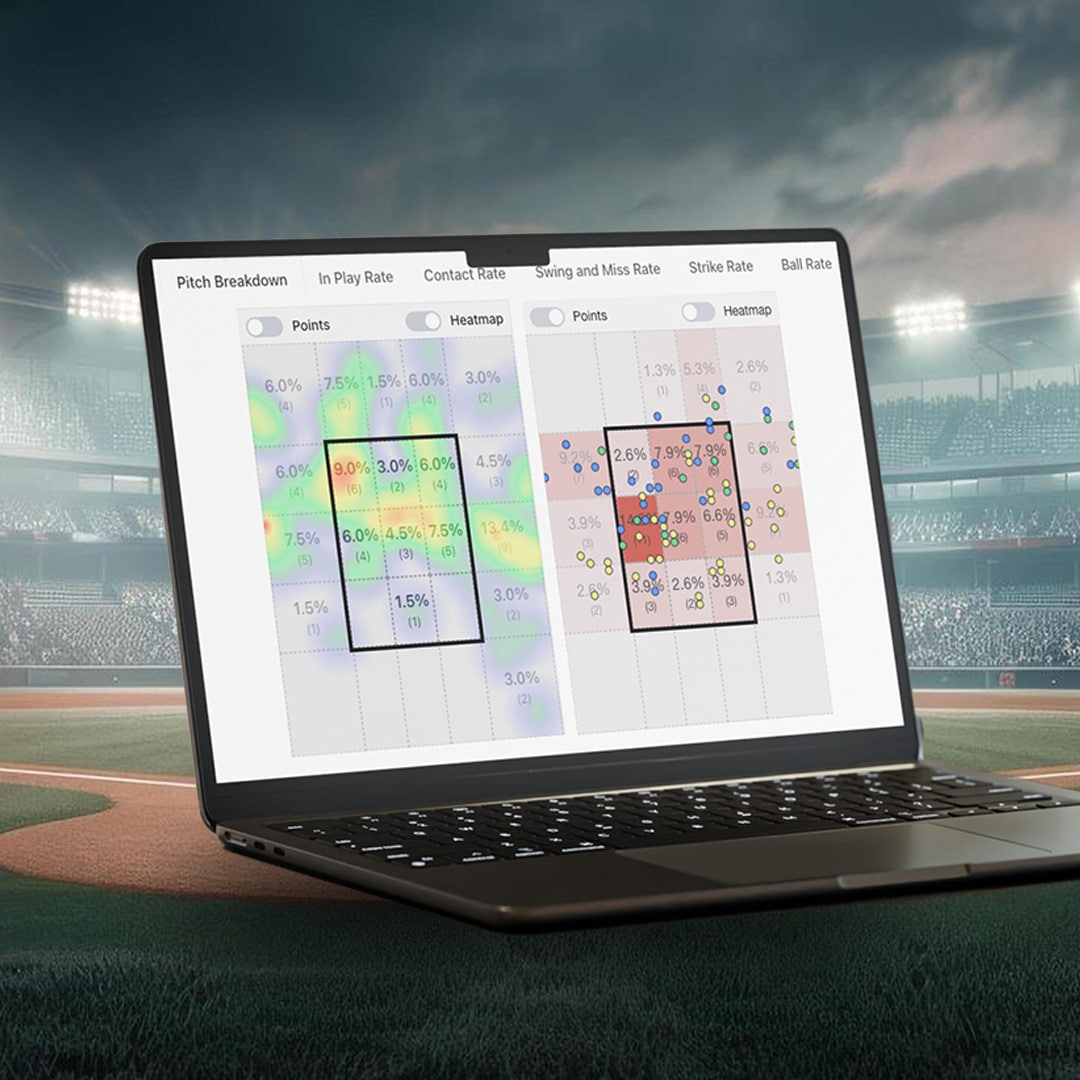
Big-League Analytics in your dugout for free
With GoRout Connect, GoRout Diamond customers receive access to AWRE Sports suite of analytics tools for free!