

Youth Football Playbook: Download GoRout's Free PDF
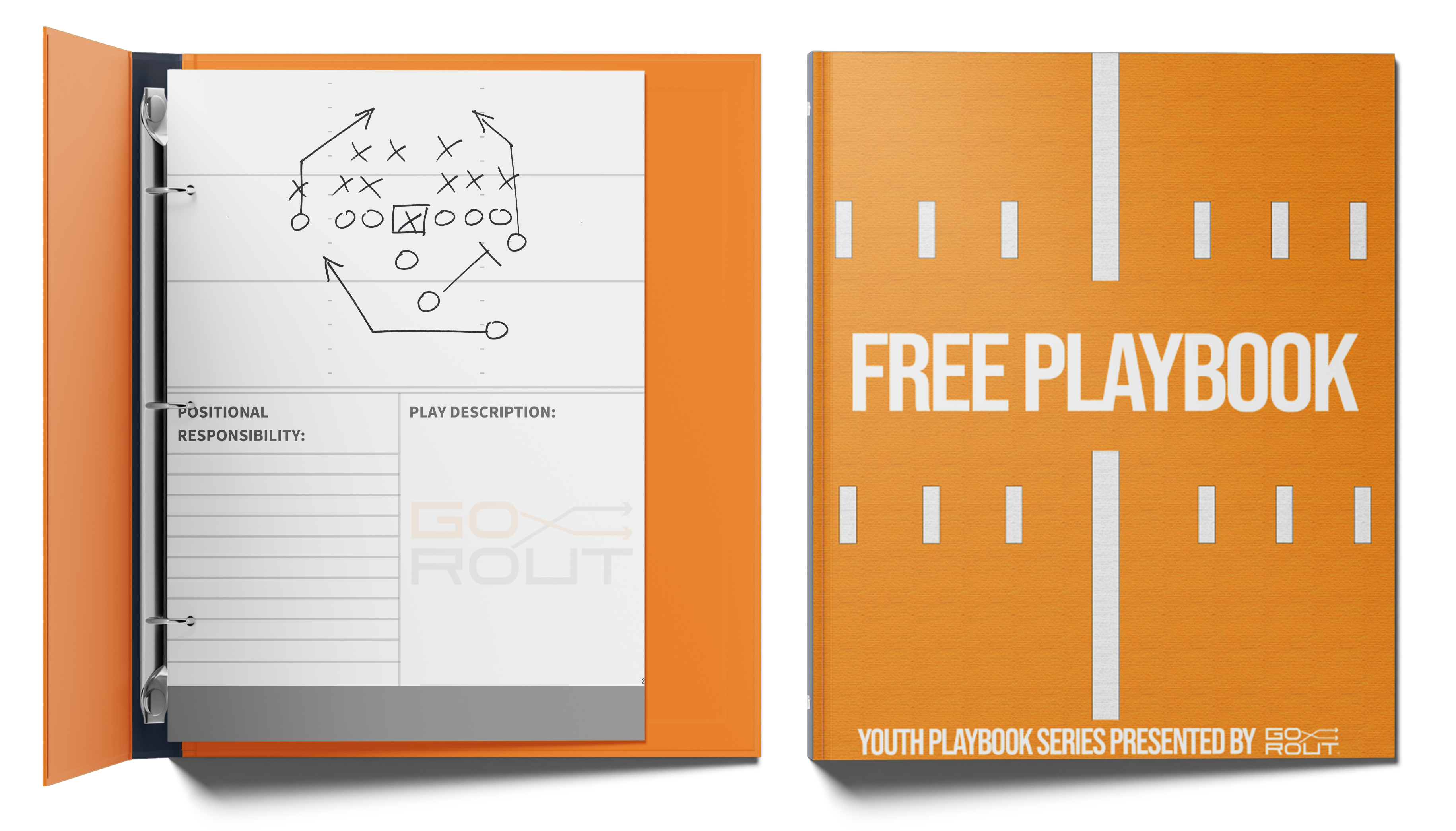
We have created FREE youth offensive football playbooks that are designed for coaches that are new to the game or the parent that is stepping up to coach their youth football team. We provide four different playbook options for you to implement. The easy to use sheets are laid out to show each player what their responsibility is for every play.
Get these FREE assets delivered to your inbox by filling out the form below. Wait for 60 seconds and refresh your inbox to see an email from us with the PDFs attached.
What is a Youth Football Playbook?
A youth football playbook is the compilation of formations and plays that youth football coaches use to develop their game plan. Coaches utilize basic, balanced formations such as the I-Formation, Wishbone, or Double-Wing in youth football. It's rare to incorporate passing heavy formations like spread offense or air raid because many youth quarterbacks lack experience to run them effectively.
A successful youth football playbook for beginners should be simple, focusing on a few core concepts rather than dozens of plays. Simplicity helps reduce pressure on players and makes it easier for coaches to teach their playbook.
4 Free Youth Football Playbooks
The 4 free youth football playbooks from GoRout include:
- Flexbone
- Wishbone
- Power T, and
- Wing T
Flexbone Playbook
The Flexbone formation is effective for youth teams with strong running backs and a downhill fullback, emphasizing simplicity and flexibility. Still used today by many high school programs and colleges nationwide, this offense is fast, flexible and fun to run.
GoRout’s Flexbone Playbook for Youth Football includes plays like:
- Sweep
- Dive
- Boot
- Triple Option
- Out, and
- Go
Wishbone Playbook
The Wishbone formation is known for its ability to run the triple option and has been a staple in football, contributing to multiple national championships in the 70s and 80s at the collegiate level.
If you love to run the ball and are interested in using the triple option, the Wishbone Playbook is a strong choice.
GoRout’s Wishbone Playbook for Youth Football includes plays like:
- Sweep
- Dive
- Boot
- Triple Option
- Out, and
- Go
Power T
The Power T formation features three running backs and is considered one of the oldest offensive formations in American football, designed for a smash-mouth style of play. Each of the three running backs are a constant threat to run the ball, keeping the defense guessing.
If you prefer a tried and true offense to move the ball, the Power T playbook may be for you.
GoRout’s Power T Playbook for Youth Football includes plays like:
- Sweep
- Dive
- Boot
- Student Body
- Out,
- Go
Wing T
The Wing T formation is characterized by misdirection and flexibility, allowing for various play options including reverses and passes, making it complex but rewarding when executed correctly.
Featuring flipping formational strength, two reverses, and three passes, this offense is the toughest to implement of the four. But, when implemented and executed right, the opportunities for big plays are endless.
GoRout’s Wing T Playbook for Youth Football includes plays like:
- Sweep
- Dive
- Reverse
- Boot
- Double Reverse
- Slant
- Out, and
- Go
Youth Football Plays to Include in Your Playbook
Below is a list of common plays to add to your youth football playbook:
- Sweep
- Dive
- Power
- Trap
- Counter
- Boot
- Student Body
- Reverse
- Double Reverse
- Jet Sweep
- Triple Option
- Play Action
- Slant
- Out
- Go
Sweep
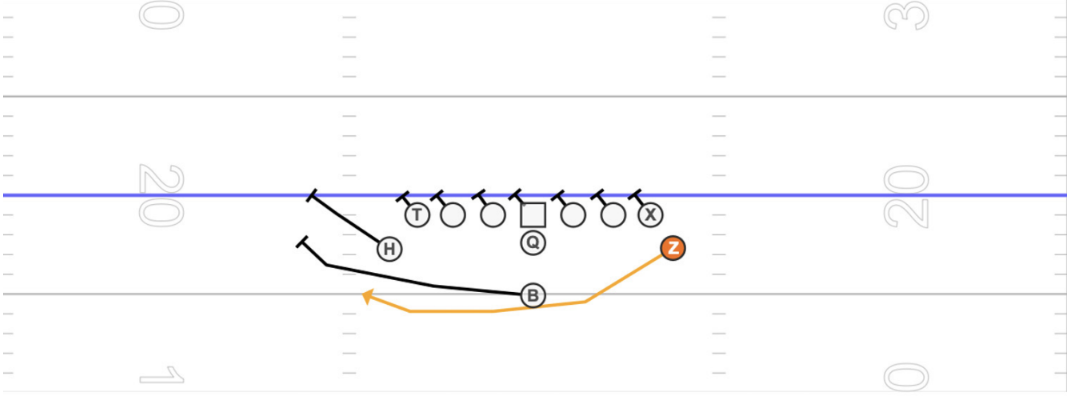
The Sweep (or Toss) is designed to get fast players to the outside, involving a lateral toss and downfield blocking. A running back follows the o line and additional blockers after the snap, looking for a hole to break through on the outside.
Coaches can design the sweep as a lateral toss or a standard handoff. It’s a simple run design that is best utilized with a speedy back.
The following GoRout Youth Football Playbooks include Sweep:
- Flexbone
- Power T
- Wing T
- Wishbone
Dive
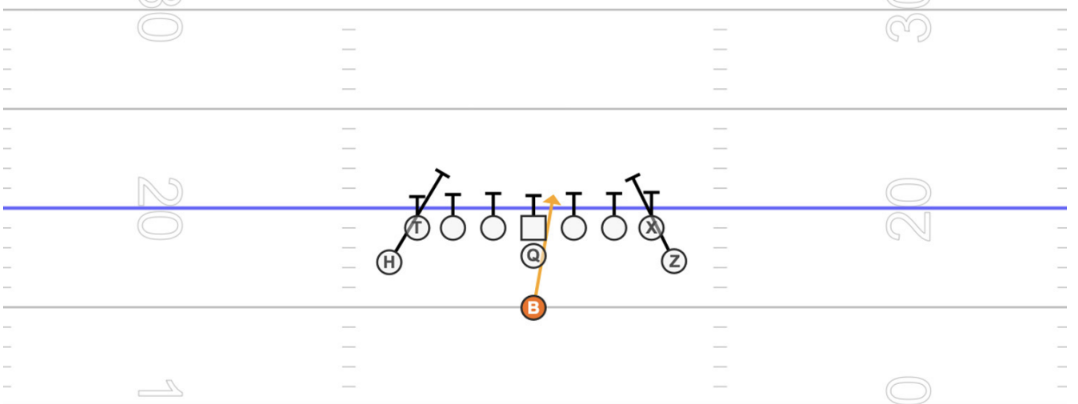
The Dive (or Wedge) is the simplest play in football, effective for short-yardage situations. A downhill, straightforward running play, Dive is an easy option to include in a youth football offensive playbook.
The following GoRout Youth Football Playbooks include Dive:
- Flexbone
- Power T
- Wing T
- Wishbone
A different variation of dive is called blast. The Blast play, commonly run out of the Wishbone formation, focuses on double-teaming defensive linemen to drive them back and disrupt the linebackers’ ability to stop the play.
Power
The Power (or Off-Tackle) play utilizes gap blocking and a pulling offensive guard, relying on a physical double-team block at the point of attack. Because of the pulling lineman, Power can be a more complex play to include in a basic youth football playbook.
Due to the advanced nature of the blocking scheme, Power is not included in any of GoRout’s youth football playbooks. That doesn’t mean you can’t add it into yours. As long as you feel your team can learn, practice, and execute it effectively, Power can be an impactful play for capable youth teams.
Trap
Trap is another downhill running play with a pulling lineman. Specifically, the 21 Trap play is a misdirection running play that can catch defensive linemen off guard, relying on a pulling lineman to create space for the running back.
Because of the moving parts in the blocking scheme, Trap is not featured in any of GoRout’s Youth Football Playbooks. As with Power, feel free to add Trap to your repertoire if you feel confident in your team’s ability to execute.
Counter
The Counter play is effective against over-aggressive defenses, involving a fake handoff in one direction while handing the ball off to a back going the opposite way. Counter involves numerous moves for deception including pulling multiple offensive linemen, in addition to the running back’s misdirection steps.
Timing is crucial to execute Counter, from the running back taking the misdirection steps to the precise motion and position of the pulling linemen. For that reason, it’s one of the more difficult plays to introduce in a youth playbook.
It’s not included in any of GoRout’s youth playbooks, but more experienced levels of youth football may be able to incorporate Counter into their game plan.
Boot
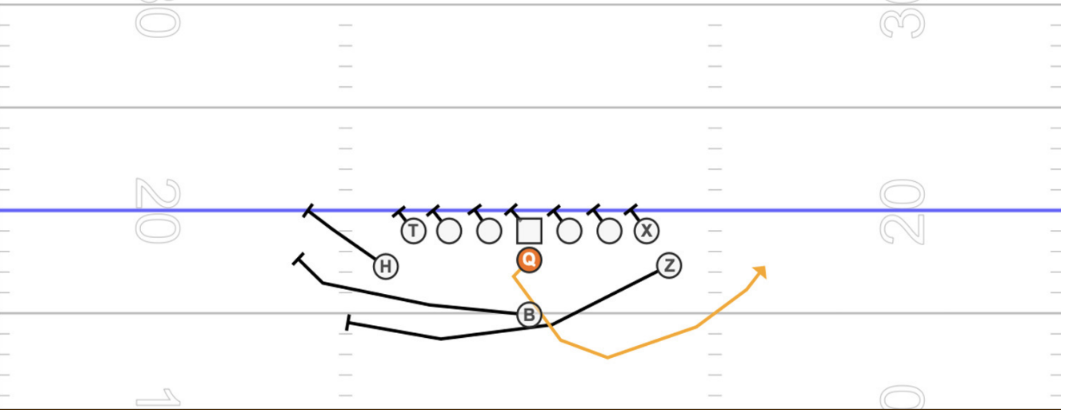
Boot is a misdirection running play, where the quarterback fakes a handoff to the running back before rolling to the opposite side of the field. The blocking scheme commits to the side of the fake run, tricking defenses into biting on the running back.
With the misdirection in play, the qb has open room to run while the defense processes what is happening. Boot is a relatively straightforward play to incorporate into a youth football offense.
The following GoRout Youth Football Playbooks include Boot:
- Flexbone
- Power T
- Wing T
- Wishbone
Student Body
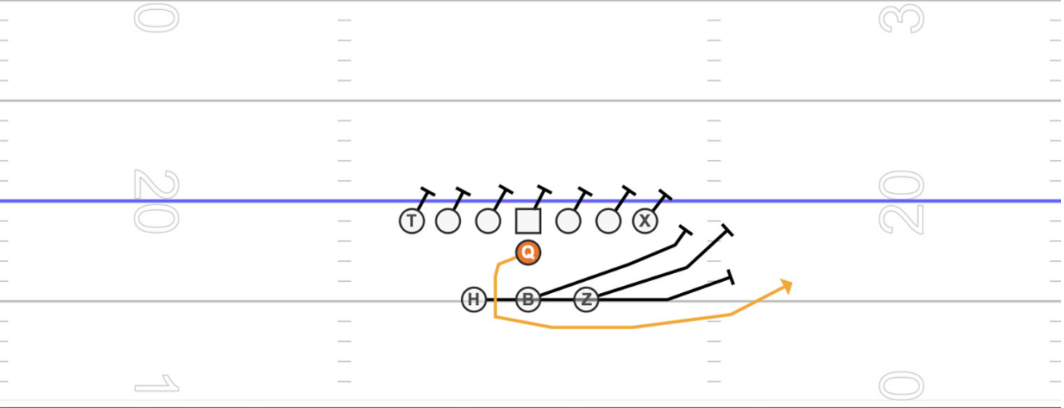
Student body is a running play where the quarterback follows a wall of blockers on a sweep.
The blocking scheme is similar to boot, with all of the offensive linemen and three additional blockers from the backfield moving in the same direction. As the play starts, the quarterback waits for the blocking backs to pass before sweeping in the same direction.
Student body is included in GoRout’s Power T Youth Playbook.
Reverse
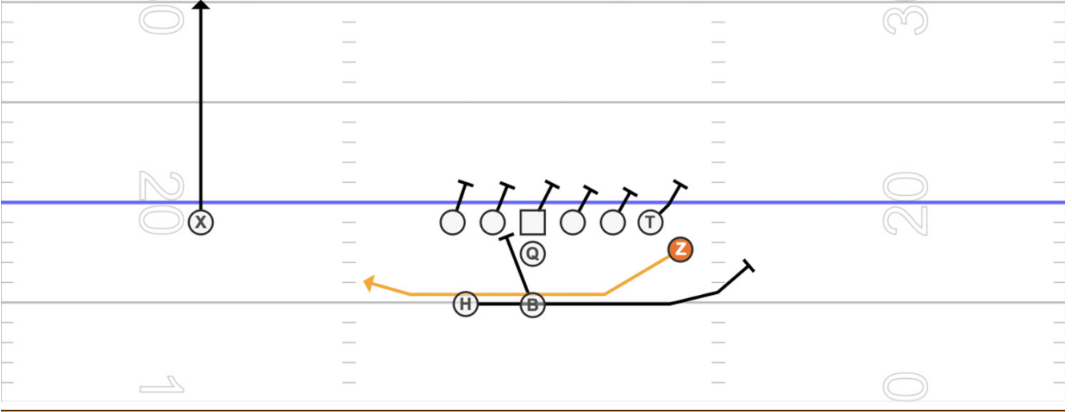
Reverse is a running play where the halfback acts as a decoy ball carrier on a sweep before the slot receiver motions across to receive the handoff. The offensive line blocks in the direction of the halfback sweep, misleading the defense.
As there are moving parts and motion, reverse can be a more time consuming install. However, most youth football players should be able to execute the play with enough drill time, instruction, and reps.
Reverse is included in GoRout’s Wing T Youth Playbook.
Double Reverse
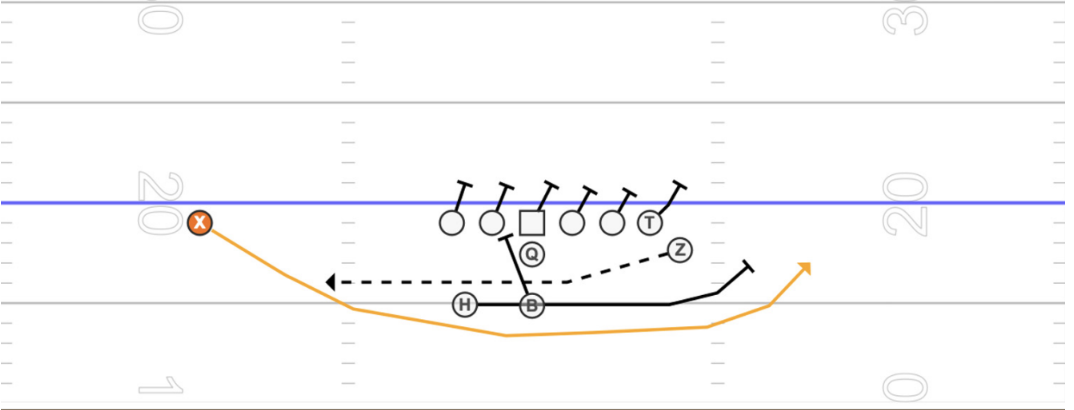
Double reverse is a running play where the halfback acts as a primary decoy and the slot receiver motions across as a second decoy ball carrier. Once the decoys pass, the outside wide receiver motions across and receives the handoff.
After all of the decoys, the wide receiver carrying the ball follows the blocking scheme on the play side. That’s a major difference between the reverse and double reverse plays. As with the reverse, double reverse can be a tricky play to install into a youth offense.
Double reverse is included in GoRout’s Wing T Youth Playbook.
Jet Sweep
The Jet Sweep is an effective play that attacks the edge of the defense, utilizing a quick athlete in motion to gain speed before receiving the ball from the quarterback. Jet Sweep creates misdirection and stretches the defense horizontally.
It has the potential to create big plays and set up complimentary plays. Though it is relatively simple to install, Jet Sweep is not included in GoRout’s Youth Football Playbooks.
Triple Option
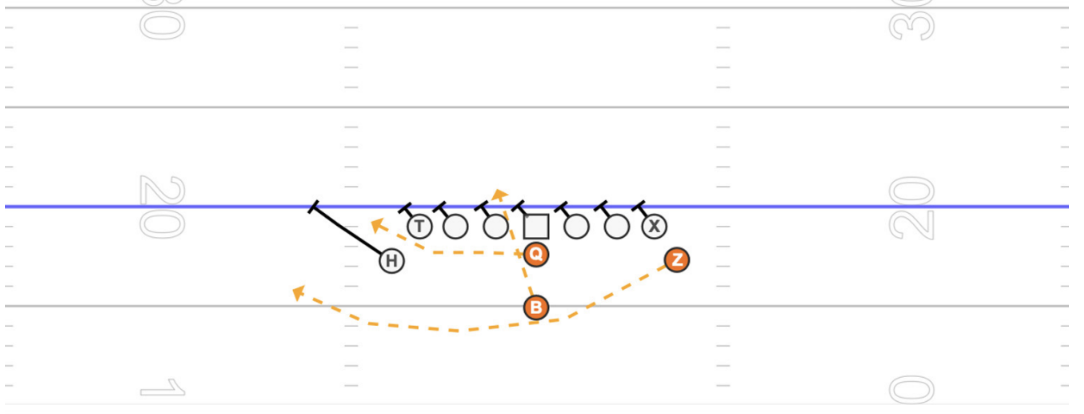
Triple Option is a running play that gives three options for ball carriers. The quarterback reads the defense and decides which option to go with.
In GoRout’s Triple Option, the quarterback makes one of two reads:
- Read defensive end: Pull if he crashes pitch, pitch is he stays
- Read next man: Pitch if he crashes, pull if he stays
One player runs dive and takes the handoff if given, otherwise they sell the fake. This play requires a smart quarterback who can read the defense and make quick decisions.
Triple Option is included in GoRout’s Flexbone and Wishbone Youth Football Playbooks.
Play Action
A play-action pass can exploit defensive aggression by faking a handoff and passing to a Tight End running a pop route. By keeping the passing route short and simple, coaches reduce the risk of their quarterback making an errant throw or risking an interception.
There are other ways to design play-action passes. For youth football, the emphasis should be on simple designs and reasonable routes for the quarterback’s skill level.
Slant
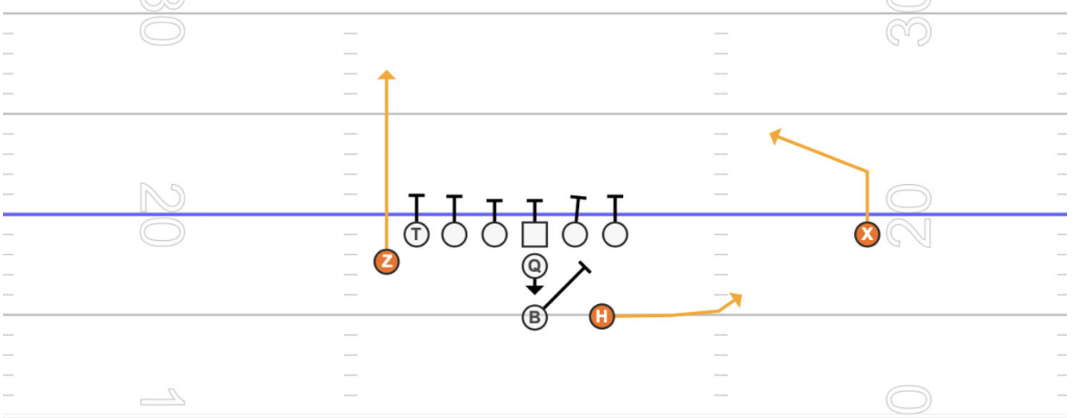
Slant is a simple passing concept where the primary target runs a slant route. The secondary receiver runs a go route, and the halfback runs out on a screen. Quarterbacks have to make a quick decision whether to hit the primary slant route or opt for the safety option in the halfback screen.
Slant is an easier play to incorporate into a youth team’s passing game, and is included in GoRout’s Wing T Youth Playbook.
Out
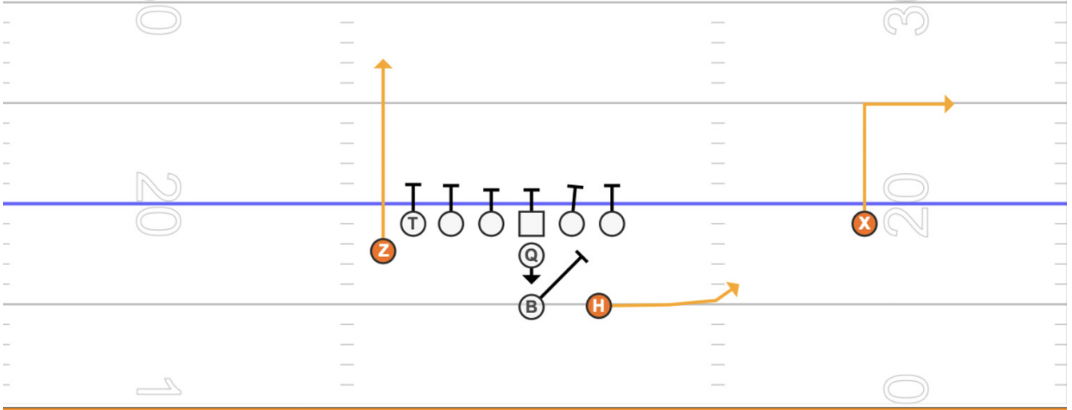
Out is another simple passing concept where the primary target runs an out route. The secondary receiver runs a go route, and the halfback runs a screen. As with Slant, the quarterback reads the primary out route and either pulls the trigger or opts for the safety option in the halfback screen.
The following GoRout Youth Football Playbooks include Out:
- Flexbone
- Power T
- Wing T
- Wishbone
Go
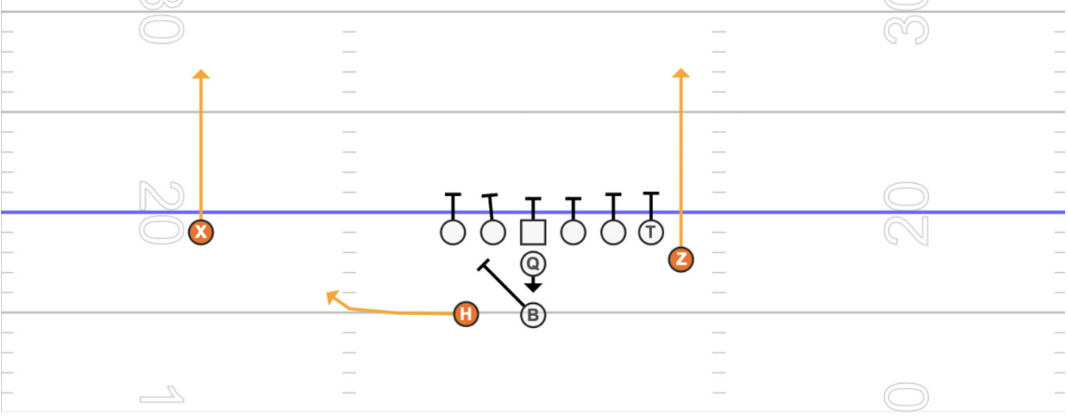
Go is a passing concept where the primary target runs a go route. A secondary receiver also runs a go route, while the halfback runs a screen. The primary go route is the quarterback’s initial read, with the halfback screen as a safety option. Go is a strong play call when looking for a spark or a big gain.
The following GoRout Youth Football Playbooks include Go:
- Flexbone
- Power T
- Wing T
- Wishbone
Tips for Designing a Playbook for Youth Football
While we’ve compiled four pre-made playbooks of free youth football plays, coaches may want to design their own version specific to their roster or strategic approach.
Here are a few tips for designing a youth football playbook:
- For young players, limit the playbook to 8 to 12 core plays that work in multiple situations. If you overload with a ton of plays, kids may forget important information and have trouble learning and executing offenses.
- Beginners should build their playbook around a strong running game due to their limited arm strength and timing.
- Symmetrical formations (like the I-Formation) allow running the same play to the left or right, reducing memorization for young players.
- Simple zone coverages, such as Cover 2 or Cover 3, help young players understand their responsibilities for deep passes. Man coverage is a more straightforward defense to incorporate as well.
- Beginners should learn gap assignment rather than complex zone coverages in defense, focusing on gap control in formations like Base 4-4 or 5-3