Baseball Practice: Guide for Coaches, Players, & Parents
Reading Time: 12 minutes


Reading Time: 12 minutes
Baseball practice is a crucial part of coaching. Building and growing a successful baseball team starts with practice, no matter the skill level you’re working with. Youth coaches develop foundational skills at practice that young athletes carry with them throughout their playing career. Travel, high school, college, and professional coaches use practice to prepare players for games, continue building their skills, improve their baseball IQ and awareness, and foster teamwork.
This resource is an ultimate guide to baseball practice for coaches, players, and parents. We’ll cover everything you need to know to run a successful practice as a coach, how to prepare as a player, and what to expect as a parent.
Continue reading to learn about:
- How baseball practices are organized
- Essential baseball practice gear
- Tips for successful baseball practices
- Station-based training
- How to run a successful baseball practice
- Technology in baseball practice, and
- Frequently asked questions about practice for baseball
How Do You Organize A Baseball Practice?
As a baseball coach at any level, one of your primary responsibilities is to organize practice. High school and college programs often have larger staffs, and collaborate on this task. Travel and youth coaches are limited in their resources. They have a greater responsibility to organize and coordinate logistics for each practice.
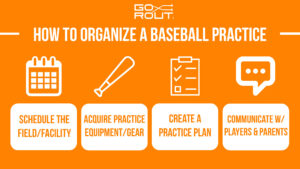
Four key tasks to successfully organize baseball practices include:
- Scheduling a field or facility
- Acquiring the proper equipment and baseball practice gear
- Creating a plan
- Communicating with players and parents
Scheduling a Field or Facility
You need a designated location to host your team’s practices. If you’re fortunate enough to have private facilities, this task is a breeze. Most youth and travel, as well as some high schools and colleges, don’t have dedicated practice spaces. Even if they have a consistent spot, they often share it with other teams.
A majority of college and high school varsity baseball programs have some version of a dedicated facility to practice at. Coaching at a school with a space reserved solely for your team frees you of the responsibility to coordinate field schedules. You still have to coordinate practice times, but there’s always a facility reserved for you.
Coaches who don’t have the luxury of dedicated facilities have to coordinate with other teams. Youth and travel baseball leagues are even more limited in their options, with some teams having to schedule practices at fields shared with the general public.
Tips for Coordinating Baseball Practice at Shared Facilities
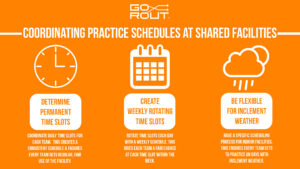
A few strategies for coordinating practice facilities include:
- Determine a permanent time slot for each team. Coordinate with the coaches of all other teams that use the same practice spot and designate specific daily time slots reserved for each team. That keeps it consistent and ensures everyone has the facility for their allotted slot. By scheduling the same time slot every day, you set a consistent routine for yourself, your team, and parents.
- Create weekly schedules with rotating time slots. Some time slots are considered “prime”, whether it’s right after school lets out for high school kids or a more convenient time for parents picking up their children after work. To ensure all athletes get an equal opportunity at each time slot, create a weekly schedule for all teams and groups sharing a facility.
- For example, your high school team may have the 3 PM time slot on Monday/Wednesday/Friday and the 6 PM time slot on Tuesday/Thursday. The 3 PM time slot allows players to practice immediately after school ends, while they have to go home first and come back for 6 PM practices.
- Be flexible with inclement weather. If rain, snow, or any other type of inclement weather forces you indoors for practice, the scheduling process changes. College and high school teams likely share gymnasiums or other indoor facilities with other sports. Understand you’ll have to be flexible and work together to ensure all teams have the opportunity to practice. If there’s any disagreement, try to meet other teams in the middle.
Acquiring The Proper Equipment and Baseball Practice Gear
As a baseball coach, make sure you have all of the gear and equipment you’ll need for practice. This is typically a combination of your players’ personal gear and equipment you have to provide. Most colleges, high schools, and organized youth leagues provide some of the larger baseball practice equipment and coach-specific gear.

Before your first practice, communicate with your team on what each player needs to bring, as well as confirming you have the remainder of the equipment necessary for an effective practice.
Coach-Provided Practice Equipment
Equipment that coaches and teams should provide include:
- Baseballs
- Ball buckets
- Gear bags
- Batting helmets
- Batting tees
- Bats
- Basic catcher’s equipment
- Bases
- Fungo bat
- L-screens and other protective screens
- Pitch backs
- Cones
- Pitching machine
- Water jug
- Batting cages (optional)
Personal Gear for Players
Baseball practice gear that you players should bring include:
- Baseball gloves
- Cleats
- Appropriate practice attire
- Batting gloves (optional)
- Bats (optional)
Creating a Plan
Prior to hitting the facility, you should prepare a plan for each practice. Planning practice ahead of time helps ensure you cover everything you need, and focus on tasks that help you and your team accomplish goals.
Effective practice plans should include a variety of drills to cover all aspects of baseball, such as:
- Hitting
- Fielding
- Pitching
- Base running
- Agility and conditioning
Prepare your practice plans however work best for you. Some coaches prefer to set plans for every practice of the week in advance, while others determine each practice session the night before or the day of. Whichever you land on, make sure you mix it up to keep things fresh and focus on different fundamentals or goals each practice.
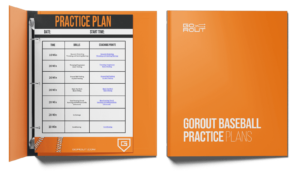
If you’re looking for inspiration or a blank template to build off, download GoRout’s free baseball practice plans. They include plans specific to various age groups, and are emailed as PDF files directly to your email address.
Communicating with Players and Parents
Another key component of organizing baseball practice is communicating schedules with players and parents. If you’re coaching college, high school, and higher levels of travel baseball, preach personal responsibility and communicate your practice schedule primarily through the players. Team coordination is key to stay on track.
For most youth teams, you’ll have to clearly communicate schedules to parents and players. Effective communication of the practice plan helps keep young players focused and engaged during sessions. Ensuring parents are always in the loop on scheduling and logistics keeps everything organized, and ensures everyone shows up at the right field at the correct time.
Consider investing in a baseball coaching app equipped with scheduling and communication capabilities. The best app for coaches to communicate with players are ones that include group messaging and one-touch reminders/alerts. Solutions that connect coaches, players, and parents in one platform keeps everyone informed.
What Are Some Tips for Baseball Practice?
As you determine what to include in your practices and the environment you’ll create, there are several factors to consider.
- Are you covering all the necessary fundamentals?
- How can you keep players engaged?
- What do you need to work on to further your defined goals?
It’s a lot to think about and can become overwhelming.
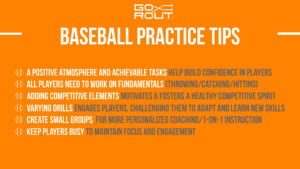
We’ve compiled a list of tips to help you facilitate successful baseball practices.
- A positive atmosphere and achievable tasks help build confidence in players. Every player responds to different coaching styles, but promoting positivity increases the likelihood of players feeling confident in themselves and determined to work harder.
- All players need to work on fundamentals, including core skills like throwing and catching. No matter the experience level, beginner or professional, these core skills should always be covered in some facet during practice.
- Adding a competitive element to practice, such as mini-challenges, motivates players and fosters a healthy competitive spirit. Incorporating fun competitions into drills and practice sessions can enhance their skills under pressure.
- Varying drills every few practices keeps players engaged and challenges them to adapt and learn new skills. Running the exact same drills time and time again makes practice repetitive and doesn’t expand your team’s skillset. Drills should be varied regularly to keep players engaged and challenged. Switch it up to keep things fresh.
- Creating small groups during practice allows for more personalized coaching and maintains player interest. Less players in each group enables more one-on-one direction from coaches and ensures proper instruction.
- Keeping players busy during practice is essential to maintain focus and engagement. No matter the age group you’re working with, nobody wants to stand around waiting and doing nothing at practice. Maintain an upbeat pace throughout practice and devise a plan that limits down time, aside from regular breaks to rehydrate and maintain a healthy environment.
Station-Based Training: A Baseball Practice Hack
One of the most productive ways to structure your fundamental skills blocks is through stations. Station-based training revitalizes baseball practice by dividing it into focused, skill-specific stations.
It involves breaking players into smaller groups and sending each group to a station that centers around a specific fundamental skill. You can focus on multiple stations within the same overarching focus, like multiple offensive stations focusing on different hitting fundamentals, or split into offensive, defensive, and other stations all at once.
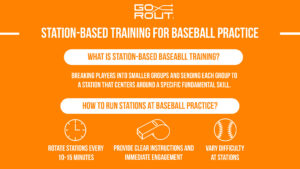
A couple of thoughts to consider when running station-based training at baseball practice include:
- Rotating stations every 10-15 minutes keeps practice lively, keeps players eager to work, and prevents drills from becoming monotonous.
- Clear instructions and immediate engagement at each station help maintain the pace of practice and reduce downtime.
- Varying difficulty at stations allows advanced players to work on specific mechanics while beginners focus on core skills.
Baseball Practice Agenda: How Do You Run A Baseball Practice?
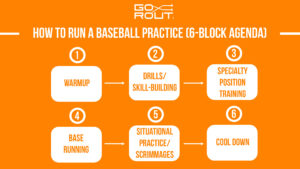
Now that you have an idea of organizing and planning, let’s break down how to run an efficient, effective baseball practice. Your baseball practice agenda should include a combination of:
- Warmups
- Skill building through drills
- Specialty position training
- Base running
- Live scenarios, simulated games, and inter-squad scrimmages
- A cool down
Warmups
Warm-ups at baseball practice should include dynamic stretching and light throwing to prepare players for the session ahead. Squats and lunges build leg drive essential for baseball performance, and warm ups are a great way to loosen up those muscle groups.
Part of warm-ups involves pairing players with a partner for a long toss throwing progression. Long toss involves gradually increasing distance to build arm strength and improve throwing technique and accuracy. Make sure players focus on making good throws with gradual increases, and keep them between 50-75% effort to warm up.
Drills
Effective baseball drills focus on fundamentals such as hitting, fielding, and throwing, incorporating agility and strength. As previously mentioned, station-based training is a good way to keep players engaged and give more hands-on instruction. Drills should align with players’ age and skill level to keep them motivated.
Here are a few tips regarding drills at baseball practice:
Fielding
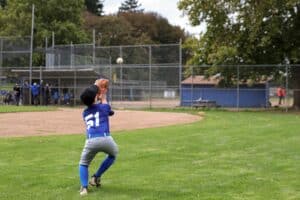
Fielding drills build defensive skills. Creative baseball fielding drills include Alligator Traps, Hot Potato, Wall Ball, and Long Toss (more intense than the warmup).
- Alligator Traps focus on securing ground balls with both hands to build catching fundamentals. It’s one of the most effective drills to teach proper form.
- The Knee Drill focuses on glove angle and catching the ball out in front, creating soft hands.
- Fly ball drills help outfielders work on tracking and catching fly balls. They can include coaches throwing them, hitting them, or using a pitching machine.
Hitting
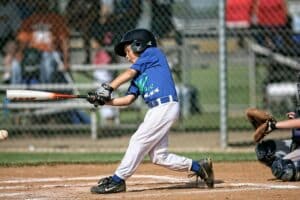
Every practice should include hitting drills to develop confident hitters, as hitting is a perishable skill. Hitting stations should include tees, soft toss, and live batting practice to work on mechanics.
- Tee Work involves practicing consistent contact and swing mechanics with a batting tee. It’s the foundational baseball hitting drill even the most seasoned veterans in Major League Baseball (MLB) work on daily.
- Dedicate time to help players better understand and recognize the baseball strike zone. While this isn’t a physical drill, it makes players aware of the boundaries and more comfortable deciphering a ball from a strike.
Speed & Agility
Agility ladder drills improve footwork and coordination, which helps on offense, defense, and base running. Other speed and agility drills involve cone drills, reaction work, and power exercises.
Specialty Position Drills
For older youth leagues, travel, high school, and college teams, you’ll need to set aside time for pitchers and catchers. Drills for these speciality positions vary by age, experience level, where you’re at in the season, and how the players are responding.
You can also use this time to:
- Teach new baseball pitch grips
- Go over situational awareness and baseball IQ
- Work on pitcher and catcher communication, or
- Run poles to keep them loose/recover from previous outings
Check out our baseball pitching drills for inspiration on what to incorporate into your practices.
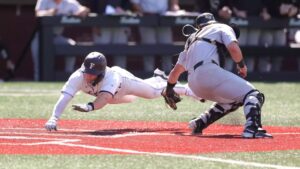
Base running
Set aside a specific section of practice to work on base running. Line your team up so one player starts, completes the task, and the next player is ready to go immediately. A typical rotation can include:
-
- Infield single: Run down the first base line through the bag, making sure not to turn in fair territory
- Single to the outfield: Run down the first base line, properly rounding the bag, finding the ball, and retreating back to the base
- Double: Run from home to second base, properly rounding first base
- Triple: Run from home to third base
- In The Park Home Run: Run from home all the way around the base path and back to home plate.
- Relay races: Place one team at home plate and one team at second base. Have players start on the sound of a whistle or coaches order. The player from home runs to second base, and the player from second base runs to home plate.
- Situational base running: Coaches place players on various bases and call out hypothetical scenarios, forcing players to make the right decisions based on the situation.
Live Scenarios, Simulated Games, and Inter-Squad Scrimmages
Incorporate drills that focus on fundamental mechanics and game-like situations to improve baseball skills.

This can include:
- Live batting practice and scenarios. Combine live batting practice on the field with a coach pitching, and base running scenarios. Let players hit freely to start, and then call out specific situations for batters and runners to practice.
- Ex. Practice hit and run execution with a runner on first base. Place emphasis on hitting the ball to the right side, in the gap where the second baseman is running to cover the steal.
- Simulated games. Prepare your team for various situations that may arise in games by specifically practicing them.
- Inter-squad scrimmages. Split your team into two “squads” and have them scrimmage each other. This is as close to a real game as possible with practice. Have pitchers throw live to the opposing team, but make sure they protect themselves and their arms.
A Cool Down
At the end of practice, have players stretch and cool down to prevent injuries. This shouldn’t last more than 5-10 minutes.
Have players stretch all muscle groups to ensure proper recovery.
Technology at Baseball Practice
While baseball practice is about working with your players to grow and build team cohesion, technology can help you get more out of your time. GoRout is an innovative pitch calling device that teams use to improve coach-to-player communication.
The GoRout Diamond electronic pitch calling system shines at game time, but it’s also a useful tool for baseball practice. When breaking apart for position-specific practice blocks, coaches can use the pitch calling watch to call pitches in bullpen sessions. It expedites the session, reduces miscommunication, and prepares players to use the devices in meaningful games.
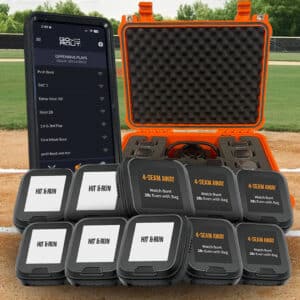
Outside of practice, the system includes GoRout Connect: various integrations that provide insight and analytics to assess game performance. With GoRout connect, coaches at any level can access:
- Strike zone maps
- Baseball spray charts, and
- Pitch intent vs. result reports
To learn about pricing, get a quote today!
Baseball Practice FAQs
What Do You Wear To Baseball Practice?
Players should wear an athletic outfit to baseball practice. Most coaches require players to wear full practice gear, including baseball pants, a hat, and cleats.
For certain positions, or less intense practice days, coaches may allow players to wear regular sweatpants or gym shorts. If a session takes place inside or any other surface where cleats aren’t allowed, players should wear either trainers or other athletic shoes.
Coaches should wear some type of athletic clothing to practice. Oftentimes, coaches demonstrate drills or actively participate in practice. The specific attire depends on your preference as a coach. Some wear gym shorts or sweatpants, while others prefer baseball pants to lead by example.
How Long Is Baseball Practice?
The length of baseball practice tends to vary by age and skill level, as well as the competition level within the specific league. In general, baseball practice can run anywhere between 1 to 4 hours.
Here are the averages for how long baseball practice runs for each level of play:
| Level | Practice Length/Duration |
| Youth/Little League (7U – 12U) | 1-1.5 hours |
| Travel & Advanced Club (12U – 18U) | 1.5-3 hours |
| High School (14 – 18 years old) | 1.5-3 hours |
| College | 2-4 hours |
| Professional | 2-4+ hours |
What Do You Do At Baseball Practice?
Baseball practice is a time to work on fundamental skills, increase baseball IQ, work through various game situations, and run live scrimmages.
It typically consists of:
- Warmups
- Drills and fundamental practice
- Base running
- Position-specific training
- Game simulations and scrimmages
- Cool down
How Do You Practice Baseball?
To practice baseball, work on drills that hone fundamental skills. Focus on proper form and mechanics over quantity or speed of reps.
How Do You Practice Baseball At Home?
There are several ways to practice baseball at home. You can throw with a friend or family member in the back yard, hit off a tee into a pop-up net, and work on various fielding techniques.
You can also work on form by mimicking hitting, fielding, and throwing motions in front of a mirror.
At What Age Do Most Kids Quit Baseball?
13 years old is the age when most kids quit baseball. About 70% of kids quit organized sports by age 13, often citing “not having fun anymore” as the reason for doing so.
Share This Article
Related Articles



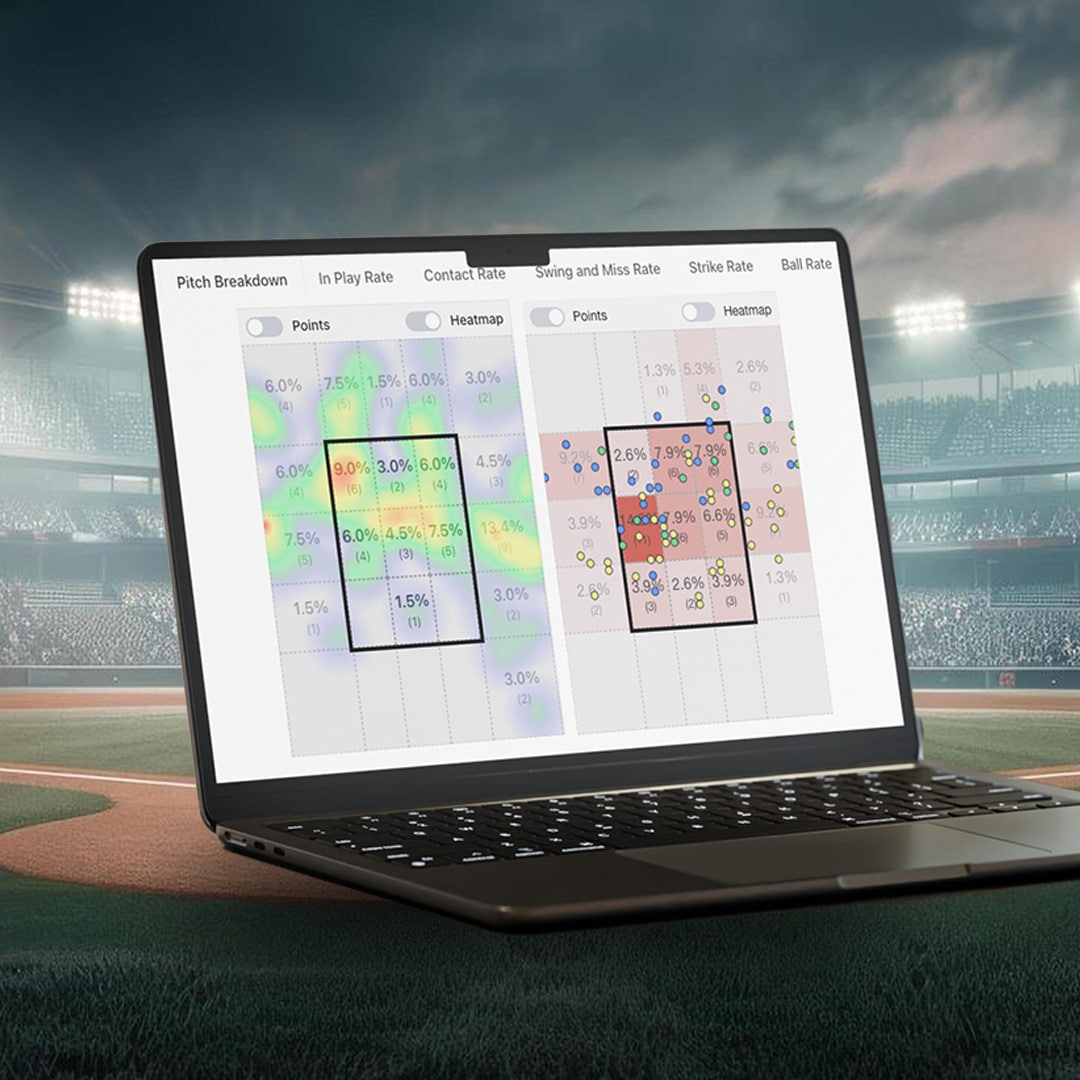
Big-League Analytics in your dugout for free
With GoRout Connect, GoRout Diamond customers receive access to AWRE Sports suite of analytics tools for free!