Football Wristbands: The Complete Coach’s Guide
Reading Time: 8 minutes


Reading Time: 8 minutes
Miscommunication kills drives. A receiver runs the wrong route, a lineman pulls the wrong direction, and a timeout disappears because the quarterback couldn’t hear the call over crowd noise.
Football wristbands fix that problem before the snap.
In this article, you’ll find every type available, a step-by-step setup guide, sizing and material guidance, and an honest look at when a digital upgrade makes sense for your program.
What Are Football Wristbands?
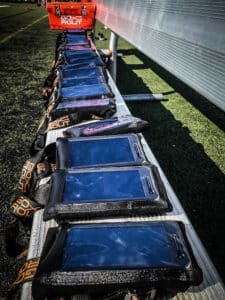
A football wristband is a wearable play-call reference device that straps to a player’s wrist and holds a coded insert listing plays, formations, and assignments. Coaches call a number or color from the sideline, and players read the corresponding play directly off their wrist. It’s the simplest, most reliable communication tool in football.
Football wristbands have a unique, real origin story.
Tom Matte, a Baltimore Colts running back pressed into emergency quarterback duty, wore the first documented NFL playbook wristband during the 1965 regular-season finale against the Los Angeles Rams.
Coach Don Shula devised the system, and Matte’s wife wrote out the plays. That original wristband sits in the Pro Football Hall of Fame today.
From that paper card, the format evolved into laminated inserts, multi-window sleeves, and now screen-based digital devices.
Modern wristbands hold play codes, formation diagrams, and position-specific assignment notes. In systems like GoRout, all 11 players access individualized calls on their own devices, including the quarterbacks and skill positions.
Want to build a complete system around your wristbands? See how a football play-calling system connects all the pieces.
Types of Football Wristbands
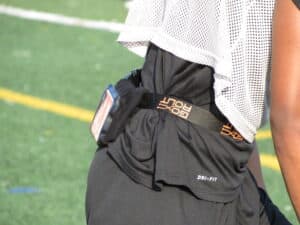
Not every wristband is the right fit for every team. Your players’ age, your budget, and how you communicate on game day all play a role in choosing the best option.
Paper insert wristbands
Paper insert wristbands are a great starting point for youth and recreational teams. A fabric or plastic sleeve holds a laminated card with your playlist. They’re low-cost, easy to print at home, and require no technology to use on the field.
Multi-window wristbands
Multi-window wristbands use a 3-window design with clear pockets that hold 12-24 plays, depending on card layout and size. They come in youth, teen, and adult sizes, so players of all ages get a comfortable fit. This is the standard choice for organized youth and high school programs that want a step up from a single-card sleeve.
Color-coded wristbands
Color-coded wristbands use color as a shorthand for formations or personnel groups, cutting down verbal communication on a loud field. Coaches often assign black wristbands to defensive players as a visual cue for a specific package. The system works best when paired with a clear signal protocol, so every player knows which color maps to which call.
Digital wristbands
Digital wristbands bring the wrist coach concept to a screen-based device. Coaches send plays via app, and players see the call appear on their wristband display in real time. GoRout’s Gridiron device is the leading example in this category, with no Wi-Fi required and encrypted communication built in.
Football wristbands fit into a broader move toward wearable technology in sports that’s changing how teams prepare at every level. The same communication idea drives electronic pitch calling wristbands in baseball, so coaches who work across sports will recognize the approach.
How to Set Up a Football Wristband System

Setting up football play wristbands doesn’t need to take long. Follow these five steps, and your team can run the full system before the end of the week.
- Choose your plays. Limit your call sheet to 12-24 plays, depending on the age group.
- Build your coding system. Use a dummy call before the real play number to stop opponents from reading your wristbands from the sideline.
- Design the call sheet. Group plays by game situation: first down, second and short, red zone, and goal line. This layout lets players find the right section in seconds rather than scanning the entire card under pressure.
- Print and laminate. The top insert can use regular paper, but always laminate the bottom insert. It’s the most exposed to sweat during a game, and unprotected paper won’t survive a single quarter. Glossy cardstock works if you don’t have a laminator.
- Insert and practice. Run at least one full practice using only the wristband system before game day. Players need time to build the habit of reading their wrist before looking to the sideline.
Pre-built templates save you time and get your system onto the field faster. GoRout offers free downloadable football wristband templates to skip the design work.
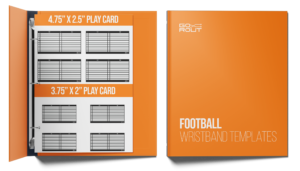
Each template is sized for standard wristband sleeves and formatted so plays are easy to read under game conditions. Edit them to match your coding system.
That’s a quick way to test a paper system before committing to a larger order. Most suppliers offer fast shipping so you can place an order and have wristbands on the field within the week.
Choosing the Right Wristband: Sizing and Materials
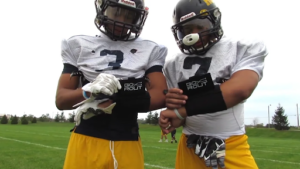
Fit matters more than most coaches expect. A wristband that fits well stays in place and lets players read the card in seconds. One that’s too big slides around; one that’s too small is uncomfortable, and players stop wearing it.
| Size | Window dimensions | Overall dimensions | Best for |
| Youth | 3.75″ x 2.25″ | 4.75″ x 3″ | Elementary school |
| Teen | 5″ x 2.75″ | 5.75″ x 3.5″ | Middle school and high school skill positions |
| Adult | 5.25″ x 3.25″ | 6″ x 4″ | Varsity, college, and adult leagues |
Wristbands come in a variety of materials, so choose based on your playing conditions.
- Fabric wristbands are soft and machine-washable, which matters after a long and muddy practice week.
- Nylon is more durable and weather-resistant, a good choice for teams that play in rain or extreme heat.
- Silicone sleeves are fully waterproof and the best option in consistently wet climates.
How many do you need?
Every player on the field needs one if you’re running a full-team system. For a basic setup, start with the quarterback and skill positions, then add the rest of the roster as the system grows.
Paper vs. Digital Wristbands: The Decision Framework
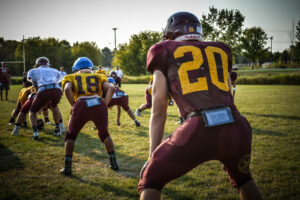
The right choice depends on your budget, your age group, and how often your plays change week to week. Here’s a direct comparison across six criteria.
| Criterion | Paper wristbands | Digital wristbands |
| Play capacity | 12 to 24 per insert | Unlimited |
| Real-time updates | No | Yes |
| Weather resistance | Low (lamination helps) | High |
| Upfront cost | Low ($1 to $5 per wristband) | Higher (hardware and subscription) |
| Ease of setup | Simple, no technology required | Requires app and device setup |
| Sign security | Low (visible to opponents) | High (encrypted communication) |
Paper wins if you’re coaching a youth team with a limited budget, a stable play list, or a group that’s new to wristbands.
Digital wins when plays change game to game, when sign-stealing is a real concern, or when you want to run a full-team system at scale, but only if your league allows in-game use.
One key factor that often gets overlooked is practice vs. game use. Digital wristbands and play calling systems are generally fine for practices at every level, but many leagues restrict or prohibit their use during games. That alone can influence whether the investment makes sense for your program.
Most programs start with paper and move to digital play call wristbands as their system grows. That’s the natural upgrade path, and it doesn’t require you to change your entire offense to make the jump, but you do need to factor in league rules before committing.
Common Football Wristband Mistakes and How to Fix Them
Even well-organized programs make the same errors. They’re easy to fix once you know what to look for.
Overloading the call sheet
Too many plays create decision paralysis. Players freeze, looking for the right call, rather than reading it in 3 seconds. Cap your sheet at 24 plays and prioritize the top 10 go-to calls your offense runs every game.
Skipping the bottom insert lamination
Sweat destroys unprotected paper in one quarter. Always laminate the bottom insert or use glossy cardstock. This is the easiest fix on the list, and it takes two minutes to get right.
No coding system
Opponents read plain numbers from the sideline, especially at the high school level, where benches sit close to the field. Add a dummy call before the real play number so a raw wristband read gives them nothing useful.
Only the quarterback wears one
Linemen and receivers miss assignments when they don’t have direct access to their own play card. Run a full-team wristband system across offense and defense, or upgrade to a digital device per player so everyone on the field gets the call at the same time.
Conclusion: Choose Your Wristband, Build Your System
Football wristbands work. They’re affordable, fast to set up, and immediately effective for teams at every level.
Start with a paper system to save on upfront costs, build your coding structure, and ensure every player who needs a wristband has one. As your program grows, the move to digital is a natural next step.
Frequently Asked Questions About Football Wristbands
What is a football wristband used for?
A football wristband holds a coded play sheet that players wear during a game. Coaches call a number or color from the sideline, and players look at their wristband to read the corresponding play, formation, or assignment. It removes miscommunication and speeds up the play-call process at every level of football.
What size football wristband should I buy?
Choose youth size (4.75″ x 3″ overall) for elementary-age players and teen size (5.75″ x 3.5″) for middle school and high school skill positions. Adult size (6″ x 4″) fits varsity, college, and adult league players. When in doubt, size up for a more comfortable fit and better card visibility.
How many plays should go on a football wristband?
Youth teams aged 10 to 12 should carry 10 to 15 plays. Teams aged 14 and older can hold up to 20 to 25 plays per insert. More than 24 plays create reading delays that slow the huddle and increase missed assignments during a game.
What’s the difference between paper and digital football wristbands?
Paper wristbands use printed inserts and require no technology, making them low-cost and straightforward to set up. Digital wristbands send encrypted play calls from a coach’s app directly to a player’s screen in real time, allowing unlimited plays, instant mid-game updates, and built-in sign security.
Can youth players use football wristbands?
Yes. Wristbands are an essential tool for youth football because they reduce the mental load on young players. Youth sizing fits smaller wrists, and a shorter play list of 10 to 15 calls keeps the system simple enough for players of all ages to use confidently.
Do wristbands work for flag football?
Yes. Flag football teams use play wristbands the same way tackle teams do. They’re especially useful because players can’t wear helmets with built-in communication, so the wristband becomes the primary way for coaches to deliver plays quickly and clearly on the field.