Football Play Call Wristbands: The Complete System Guide
Reading Time: 10 minutes


Reading Time: 10 minutes
It’s third-and-long and the clock is running. Your quarterback jogs to the line, glances at his wrist, and freezes. He misread the number. The offense runs the wrong route, the drive stalls, and a punt follows. One moment of miscommunication leads to a lost down, and possibly the game.
Football play-call wristbands exist to prevent exactly that. They’re the communication layer between the coaching staff and players, translating sideline decisions into accurate on-field execution before every snap.
Coaches have always looked for faster, more secure ways to get plays to their players. Keeping every player on the same page before the snap isn’t a nice-to-have. It’s the difference between a clean drive and a wasted down.
This guide covers how wristband systems work, how to build a coaching workflow around them, how digital systems outperform paper, and how compliance rules apply at each level of play.
How Football Play Call Wristband Systems Work
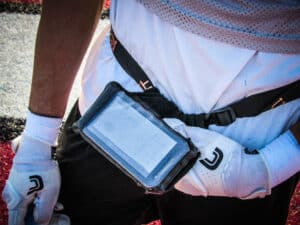
A football play-calling system is more than a band on a player’s arm. It’s the combination of call sheet design, play coding, communication protocol, and delivery method built to get the right information to the right player before the snap. Here are the basics.
Your system has three core components:
- The wristband itself is either a paper insert held inside a band with clear pockets or a durable digital device worn on the wrist.
- The play sheet or digital interface is the source of truth for every formation, route, and blocking assignment.
- The coach-to-player delivery method impacts how the call travels from the sideline to each player on the field.
The wrist coach concept (wearing plays directly on the arm) has been part of football for decades. Paper systems rely on pre-printed call sheets and a verbal number from the sideline. Digital systems push each football play directly to each device, removing every opportunity for signal theft.
Explore the complete football play-calling system at GoRout to understand how the full workflow fits together. For wristband types and sizing, see football wristbands.
Paper vs. Digital Football Play Call Wristbands: The System Comparison
Not every program needs the same system. Finding the best fit depends on your budget, level of play, and how much sign security matters to you.
Here’s a direct comparison across eight criteria.
| Criteria | Paper Wristbands | Digital Wristbands |
| Play capacity | Limited by insert size | Unlimited play storage |
| Real-time updates | Not possible mid-drive | Push new play in under 1 second |
| Sign security | Vulnerable to sideline reads | Encrypted cellular signal |
| Weather resistance | Paper degrades in wet weather conditions | Designed to withstand field use |
| Cost | Low upfront | Higher upfront, lower long-term |
| Setup time | Print and insert | Upload and sync |
| Position-specific messaging | Same sheet for all | Each device shows individual assignment |
| Compliance eligibility | Any level | Verify by state and level |
Paper wins on low upfront cost and zero tech setup. Digital wins on real-time play delivery, encrypted signals, and position-specific instructions per player.
The key differentiator?
Paper wristbands can’t be updated once a drive is underway. A digital system pushes a new play in under 1 second between any two snaps, giving coaches the ability to make adjustments that paper simply can’t match.
For programs that depend on fast coach-to-player communication as a competitive edge, that gap matters. Get a quote from GoRout to see how this system fits your program.
How to Run Your Play Call System: The Coaching Workflow
A wristband system works only as well as the coaching workflow behind it. Whether you run tackle football at the varsity level or flag football in a community league, these five stages apply. Getting the workflow right is where most teams either build an advantage or waste their equipment.
Stage 1: Build your call sheets
Organize plays by situation: first and ten, second and short, red zone, two-minute drill, and goal line. Limit your active set to 20-24 plays. More than that creates decision paralysis when the clock is running.
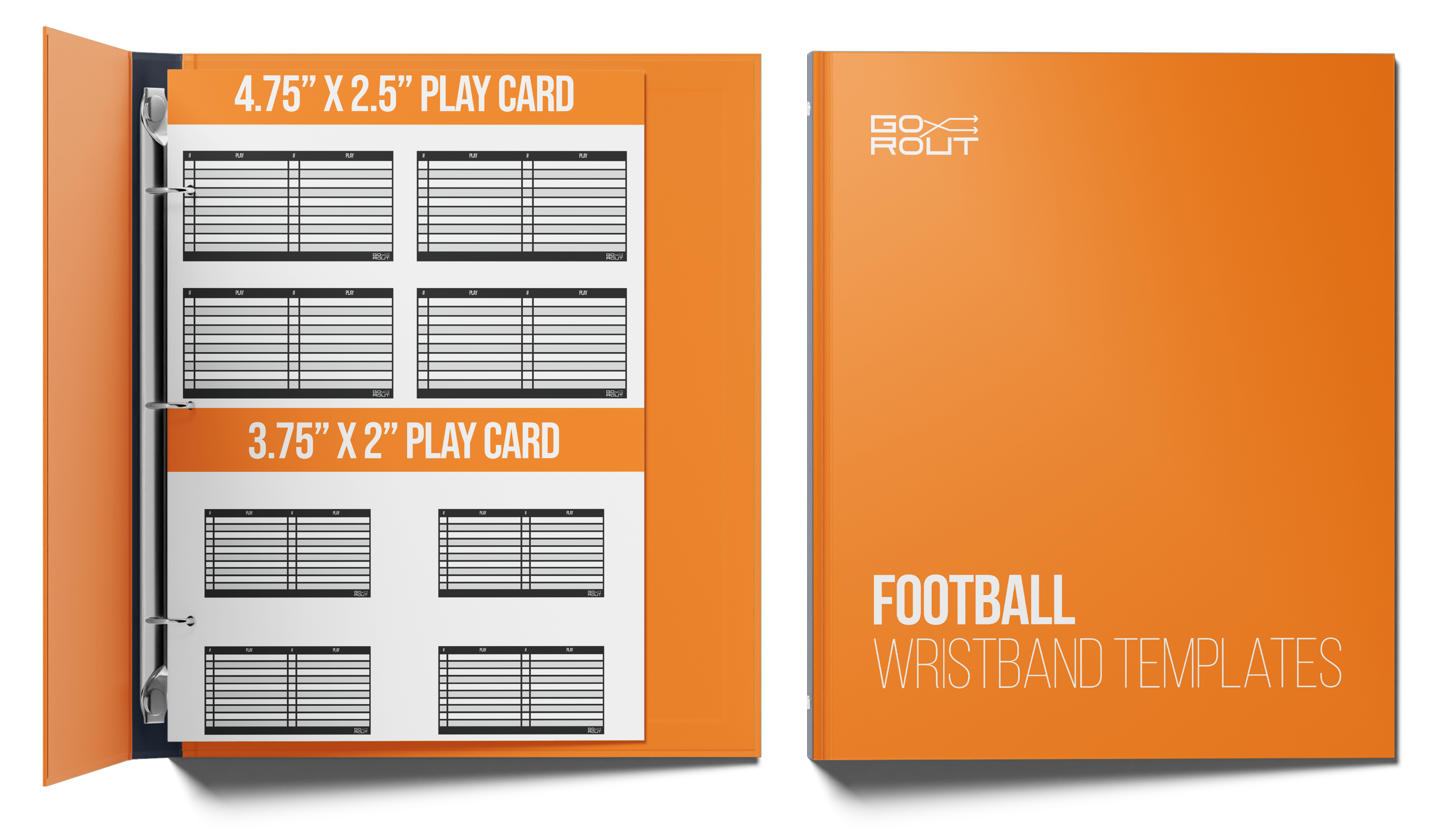
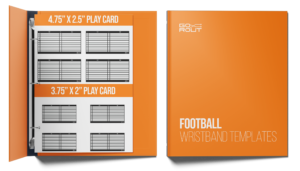
Download pre-built football wristband templates from GoRout to save setup time. The templates cover the most common multi-formation sets and are designed for direct print or digital upload.
Stage 2: Code your calls
Use a dummy-number system: announce a color or identifier before the actual play number to stop opponents from reading the call off the sideline. For digital systems, no verbal coding is needed. Calls travel directly to each device over an encrypted signal.
Stage 3: Assign wristbands by position
A single team wristband across the full roster provides easy reference for formations and snap counts. But offensive players, defensive backs, and linemen each need different information, so position-specific assignment improves execution speed across the field.
With digital systems, each device displays a different view of the same play: the quarterback sees the full formation, wide receivers see their routes, and linemen see their individual blocking scripts.
Stage 4: Deliver the call
In a paper system, the coach calls the number verbally, and every player within earshot hears, including players on the opposing side. On a digital system, the coach taps the play in the app, and every wristband vibrates and displays the call simultaneously. No verbal exchange or exposure.
Stage 5: Adjust in real time
Paper wristbands can’t be updated during a live drive. Any adjustment requires a dead ball. Digital systems let coaches push new plays between snaps with no interruption, enabling real-time communication that paper can’t replicate.
Position-Specific Use Cases for Football Play Wristbands
Football play-call wristbands aren’t a one-size-fits-all solution. Each position has different information needs, and a well-built system accounts for that. Here’s how the system applies position by position.
Quarterback
The quarterback is the primary wristband user in any system. Before the snap, the QB uses the wristband to confirm formation, play name, and motion assignment. For teen athletes still building their football IQ, eliminating the manual lookup step improves execution accuracy.
A well-designed system gives the quarterback the confidence to throw, knowing every receiver has seen the same call.
Skill positions (WR, RB, TE)
Play wristbands for skill positions display route assignments and blocking responsibilities in an easy reference format. With digital systems, each player sees only their own assignment, keeping their focus on execution rather than filtering information that doesn’t apply to their role.
Offensive linemen
Linemen are the most overlooked position in traditional wristband setups. Paper systems rarely give linemen their own wristband, forcing them to rely on memory for protection scripts and assignment details.
Digital systems make it practical to equip every lineman with a device showing individual blocking instructions by down and distance.
Defense
Defensive coordinators use wristbands to signal coverage shells and blitz packages. Pushing adjustments between snaps (when the offense shifts before the ball is hiked) is something that paper-based football sideline signs can’t match in speed or security.
Special teams
Special teams units often operate with no wristband system at all. Digital systems extend to kickoff, punt, and field goal units using the same hardware that serves offense and defense, with no additional equipment investment required.
Compliance and Legality by Level of Play
Before you commit to a digital wristband system, know the rules at your level of play. Compliance varies by governing body, and getting it wrong on game day is costly. Here’s what each level looks like right now.
High school (UIL Texas, 2025)
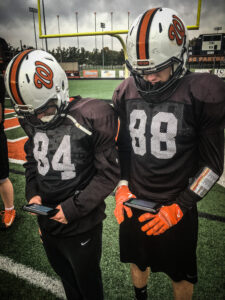
The UIL approved one-way in-game wearable devices for all players in April 2025. Communication must be one-way (coach to player, no audio) and must originate from the press box. GoRout Gridiron meets all UIL requirements and operates over an encrypted cellular network, satisfying the press-box-only rule.
Other high school programs
Each state athletic association governs wearable technology in sports separately. Texas is the first state to approve unlimited in-game wearables. GoRout’s compliance rules by state resource tracks current approvals as the football community continues to adopt these systems.
NCAA Division III
The Liberty League ran GoRout Gridiron as an experimental in-game system in 2024, making GoRout the only wearable solution to complete a full NCAA season. Full-roster approval at other divisions still requires a rules committee waiver.
Youth and flag football
USA Football and NFL Flag have not issued a national policy on wristband use. Rules are set at the local league level, so check with your specific league before game day.
How GoRout Scout Doubles Your Practice Reps
Most programs lose more time at practice than they realize. Every verbal explanation, huddle-up, or pause for players to absorb a call is a rep you don’t get back. GoRout Scout is built to fix that.
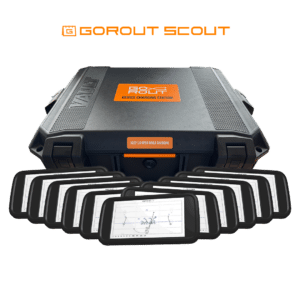
GoRout Scout works in four steps. Coaches upload scout cards to the GoRout website using any drawing software they rely on, including Hudl, Visio, Pro Quick Draw, and hand-drawn cards.
They send play calls via the practice app, devices vibrate to signal a new play is ready, and players execute immediately.
GoRout Scout devices were designed to withstand contact, sweat, and high-speed practice. Every device reacts instantly when a coach taps a play, showing the full play drawing or position-specific messaging.
The system doubles your practice reps, compounding across scout prep, 7-on-7 work, special teams installs, and new player onboarding each week.
How GoRout Gridiron Brings Digital Play Calling to Game Day
Verbal signals get read. Hand signals get stolen from film. Paper wristbands can’t update mid-drive. GoRout Gridiron solves all three problems with a system built specifically for in-game play calling.
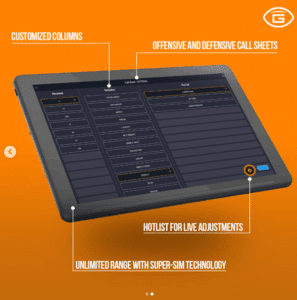
Coaches send play calls through the GoRout sending device, a one-touch tablet that handles call sheet navigation and personnel adjustments. Player devices require no setup, pairing, or programming. They’re fully encrypted and ready straight out of the box.
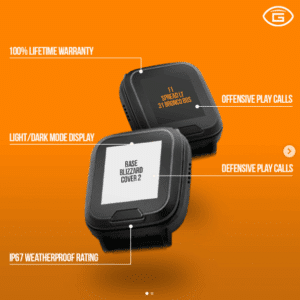
GoRout Gridiron is the cornerstone sponsor of the Texas High School Coaches Association (THSCA) and the only digital wristband system used by an NCAA conference during a full regular season (Liberty League, 2024).
Features include full-field coverage with zero distance restrictions, play additions on the fly, and instant offense-to-defense switching with a single click. Player devices carry a 100% lifetime warranty.
GoRout Connect: Integrating Your Existing Coaching Tools
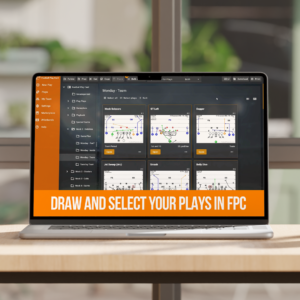
Your program already uses software to draw plays and manage your playbook. GoRout Connect is built so you don’t have to abandon those tools. It’s GoRout’s newest operating system, expanding platform capabilities by connecting to the tools your staff already knows.
GoRout Connect enables GoRout technologies to work with Pro Quick Draw, Football Play Card, FirstDown Playbook, and AWRE Sports.
If you’re already drawing plays in one of those platforms, you can send them directly to player devices without reformatting or rebuilding anything, with industry-leading speed and reliability for coach-to-player communication.
Five Mistakes That Undercut Your Wristband System
Even a well-designed system breaks down when it isn’t used correctly. Most problems with football play-call wristbands stem from setup and habits. Here’s where programs most often go wrong.
- Overloading the call sheet. More than 24 plays create decision paralysis. Prioritize the 15-20 plays your offense runs most successfully.
- No coding system on paper wristbands. Without a dummy identifier, opponents can read the call from the sideline or reverse-engineer it from film. Add a color or word prefix before every real play number.
- Only the quarterback wears a wristband. When linemen and skill players have no assignment reference, execution depends entirely on memory. A playbook wristband for every player keeps their specific assignment on their wrist and not held in their head under game pressure.
- Not practicing with the system. Players who encounter wristbands for the first time in a game freeze. Form the habit from week one of preseason so every player can quickly reference their assignment with confidence when the game is on the line.
- Not checking compliance before game day. Digital wristbands are approved under UIL rules in Texas, but aren’t universally legal. Coaches must verify rules on their specific governing body’s site before equipping players for competition.
Conclusion About Football Play Call Wristbands
The upgrade path is clear. Start with a paper call sheet, add a coding system for sign security, then move to digital real-time play delivery when your program is ready for encrypted communication and position-specific instructions.
GoRout gives football coaches the full suite:
- GoRout Scout for practice efficiency (doubling reps per session)
- GoRout Gridiron for game-day encrypted play calling (UIL-approved, full NCAA season completed, 100% lifetime device warranty)
- GoRout Connect to integrate with the software your staff already uses
The goal of every football play-call wristband system is the same: deliver accurate information to every player before every snap, with zero delay and zero miscommunication.
FAQs About Football Play Call Wristbands
What are football play call wristbands?
Football play call wristbands are wrist-worn tools that display coded or visual play information during practice or competition. They give players on-field access to formation assignments, route responsibilities, and snap-count instructions, eliminating the need to look to the sideline between every play.
What’s the difference between paper and digital football wristband systems?
Paper wristbands use a pre-printed insert behind clear windows. The coach calls a number, and players reference the corresponding play on their sheets. Digital wristbands receive encrypted calls from a coaching app and display individual assignments with no verbal exchange. Digital systems update in under one second; paper can’t change once a drive begins.
Which positions benefit most from football play wristbands?
Every position benefits, but the quarterback is the primary user. Offensive linemen and skill positions gain the most from digital systems, since each device shows a position-specific view of every play. Even standard black wristbands with paper inserts improve accuracy when every player has their own reference before the snap.
How many plays should a wristband call sheet contain?
Most programs limit active call sheets to 20-24 plays. Load in more, and players slow down when referencing overcrowded sheets under a live clock. The same organizational discipline applies to digital systems, even though they have no practical storage limit.
Are digital football play call wristbands legal in high school?
Texas UIL approved one-way in-game wearables for all high school players in April 2025. Every other state association governs separately. Don’t assume approval: verify your governing body’s rules before equipping players for competition.
What makes a wristband system durable enough for game use?
A game-ready system must withstand contact, moisture, and the full demands of practice and competition. Paper inserts degrade in wet conditions. GoRout Gridiron devices are designed for field use and backed by a 100% lifetime warranty, ensuring durability for every player who wears one.
Share This Article
Related Articles




Free Playbook Template
Our downloadable template offers a sleek, detailed design with space for positional roles, play descriptions, and any play notes that you want to include.