Football Personnel Groupings: A Guide for Coaches & Players
Reading Time: 14 minutes


Reading Time: 14 minutes
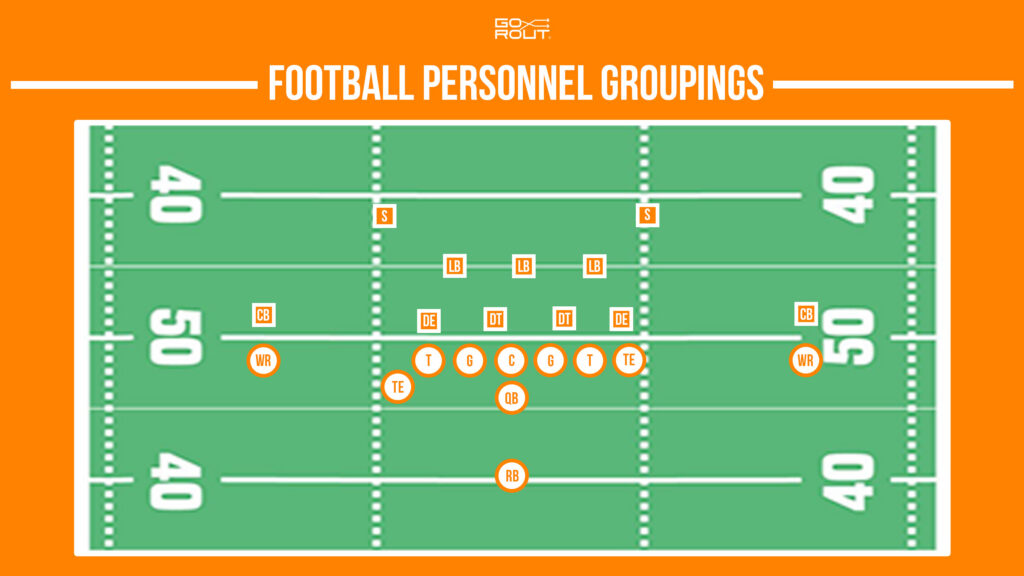
Personnel groupings in football refers to specific packages of offensive players that coaches use to design plays. Skill position players are the distinguishing factor of each personnel grouping, specifically tight ends and running backs.
Personnel packages are major concepts in the sport’s strategy and play a significant role in a team’s success on the field. Certain situations call for specific groupings, while other packages help limit usage and provide rest for players. In this resource, we’ll provide a comprehensive overview and analysis of football personnel groupings.
Continue reading to learn:
- What football personnel groupings are
- Why personnel packages are important
- How to name football personnel packages
- All of the potential football personnel groupings
- Common offensive personnel groupings
- FAQs about personnel groupings in football
What Are Football Personnel Groupings?
Football personnel groupings are set combinations of players, designated by the position types included in each respective package, that coaches send to the field.
Personnel groupings are also referred to as football personnel packages, with the two terms used interchangeably.
Why Are Football Personnel Packages Important?
Coaches use personnel packages in football to execute their strategy or combat an opponent’s alignment.
Personnel groupings are used to set a base for most offensive plays and allow teams to send out players in a timely manner during a game. They allow teams to create favorable match-ups and force the defense to adjust and react during a game.
How Are Football Personnel Groupings Named?
Offensive personnel packages are commonly denoted using a two-digital numerical system that identifies the type of offensive personnel and the number of each type of personnel.
How to Name Personnel Packages in Football
The formula for naming football personnel packages is straightforward:
- Personnel grouping name = # of RBs + # of TEs
The first digit in the personnel grouping indicates the number of running backs on the field, while the second digit indicates the number of tight ends.
12 personnel, for example, consists of 1 running back and 2 tight ends.
- 12 personnel = 1 RB + 2 TEs
11 offensive players are allowed on the field each play. Five of those spots are typically reserved for offensive linemen, and one spot for the quarterback. That leaves 5 open spots for the remaining offensive personnel: running backs, tight ends, and wide receivers.
Therefore, the number of wide receivers on the field is inferred by subtracting the total number of running backs and tight ends from the five remaining players allowed on the field.
Understanding Offensive Personnel Groupings
Personnel groupings set the foundation for offensive game planning and strategy. Coaches design a set of plays within each personnel package.
Personnel groupings can vary depending on the offensive strategy and the specific matchups against the defense. On the flip side, defenses often adjust their formations based on the offensive personnel groupings to create favorable matchups.
The evolution of personnel groupings reflects changes in offensive strategies and the types of players utilized in various formations. In the chart below, we break down each potential offensive personnel grouping by position.
As a reminder, personnel groupings in football are commonly denoted using a two-digit numerical system that identifies the type of offensive personnel and the number of each type of personnel.
- The first number designates how many running backs are in the grouping, and the second number designates how many tight ends take the field.
- The number of wide receivers on the field is implied by subtracting the total number of running backs and tight ends from five.
Different Personnel Groupings in Football
| Personnel Package | Running Backs | Tight Ends | Wide Receivers |
| 00 personnel | 0 RB | 0 TE | 5 WR |
| 01 personnel | 0 RB | 1 TE | 4 WR |
| 02 personnel | 0 RB | 2 TE | 3 WR |
| 03 personnel | 0 RB | 3 TE | 2 WR |
| 04 personnel | 0 RB | 4 TE | 1 WR |
| 10 personnel | 1 RB | 0 TE | 4 WR |
| 11 personnel | 1 RB | 1 TE | 3 WR |
| 12 personnel | 1 RB | 2 TE | 2 WR |
| 13 personnel | 1 RB | 3 TE | 1 WR |
| 14 personnel | 1 RB | 4 TE | 0 WR |
| 20 personnel | 2 RB | 0 TE | 3 WR |
| 21 personnel | 2 RB | 1 TE | 2 WR |
| 22 personnel | 2 RB | 2 TE | 1 WR |
| 23 personnel | 2 RB | 3 TE | 0 WR |
| 30 personnel | 3 RB | 0 TE | 2 WR |
| 31 personnel | 3 RB | 1 TE | 1 WR |
| 32 personnel | 3 RB | 2 TE | 0 WR |
| 40 personnel | 4 RB | 0 TE | 1 WR |
| 41 personnel | 4 RB | 1 TE | 0 WR |
Common Offensive Personal Groupings
Now that you’re aware of all possible personnel groupings, let’s take a look at some of the most common packages in greater detail.
The most common personnel packages vary by league, team, coaching philosophy, and roster construction. NFL teams have transitioned to a more pass-heavy league, which has influenced the popularity of certain personnel groupings. Certain rosters with multiple talented tight ends or running backs may lean into specific personnel grouping to leverage their strengths.
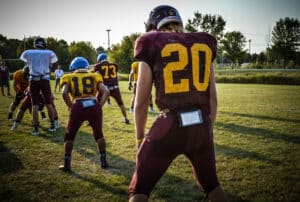
Here’s a quick refresher on the names of football personnel groupings. Every common offensive personnel package has five offensive linemen and one quarterback, which leaves the offense with five players from the following three position groups: running back, tight end, and wide receiver.
- The first digit in the personnel grouping identifies the number of running backs on the field, and
- The second digit identifies the number of tight ends on the field
Let’s take a closer look at the following football personnel groupings:
- 12 personnel
- 11 personnel
- 21 personnel
- 13 personnel
- 10 personnel
- 23 personnel
- 22 personnel
- 20 personnel
What is 12 personnel?
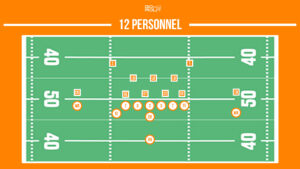
12 personnel, characterized by one running back, two tight ends, and two wide receivers, is one of the most popular personnel groupings in football. It’s a versatile package that leverages two tight ends to attack defenses on the ground and through the air.
Breaking it down by position, 12 personnel in football includes:
- 1 RB
- 2 TEs
- 2 WRs
12 personnel allows talented running backs and tight ends to showcase their abilities and positively impact their team’s performance.
How to use 12 personnel in football
At its core, coaches lean on 12 personnel to run the ball. With two tight ends on the field, you have two potential blockers in addition to your offensive line.
Coaches can use tight ends in multiple ways to effectively run the ball:
- Same side positioning. Place both tight ends together to load run blockers on one side of the offensive line. This forces the defense to combat four blockers on the respective side of the offensive line. Either run to the strong side and let the blockers do their job, or run to the weak side where there are less defenders, more potential for open space, and defenses anticipating strong-side runs.
- Opposite side positioning. Position one tight end at each side of the offensive line for an additional run blocker each way. This keeps defenses guessing which side you’ll run the ball toward, while beefing up each side with an additional blocker.
Teams with skilled pass-catching tight ends can use 12 personnel for an aerial attack. Two tight ends and two wide receivers equip innovative offensive coordinators with four weapons to work with. Because it’s a run-dominant look, play action can be incredibly effective out of 12 personnel.
What is 11 personnel?
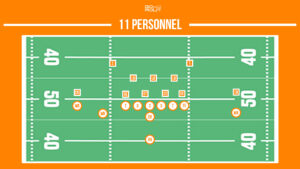
11 personnel, consisting one running back, one tight end, and three wide receivers, is a common offensive package designed to strike a balance between the passing and rushing game. It’s one of the most common offensive packages in football and the most commonly used offensive package in the NFL.
Breaking it down by position, 11 personnel includes:
- 1 RB
- 1 TE
- 3 WRs
How to use 11 personnel
Use 11 personnel to spread out the offense and create space. With less bodies in the backfield and on the line of scrimmage, 11 personnel can make things easier for the quarterback. Three wide receivers, as well as a tight end and running back who can be used in the passing game, gives the quarterback five potential targets to connect with.
11 personnel allows for a variety of looks when drawing up plays. You can run 11 personnel five plays in a row and show five distinct, unique looks.
- The combination of skill players opens up the possibility for five wide sets, even with only three wide receivers on the field.
- You can isolate your tight end, lining three wide receivers in trips on the other side and the running back in the backfield.
- Load the three wide receivers and tight end on the same side of the line, designing creative route combinations to confuse the defense
Leverage your tight end and receivers in the run game. A strong run-blocking tight end adds an additional gap to be defended. Get creative when designing running plays out of 11 personnel to maximize your tight end’s talent and confuse the defense. You can also use wide receivers as decoys and ball carriers on runs out of this package.
What is 21 personnel?
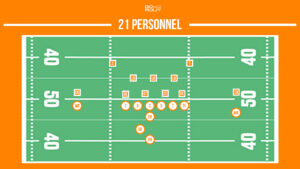
21 personnel features two running backs, one tight end, and two wide receivers, and is considered a classic Pro Style personnel grouping. Many teams use 21 personnel as their base formation, the first package they install and their primary look.
Breaking it down by position, 21 personnel includes:
- 2 RBs
- 1 TE
- 2 WRs
How to use 21 personnel
21 personnel offers a lot of flexibility for a balanced offensive attack. Two running backs and one tight end provide ample run-block support, while simultaneously offering creative route combinations in the pass game.
Clear a path for the ball carrier on running plays. The second running back, often a larger full back, and the tight end give coordinators two additional blockers to work with for runs.
Capitalize on run-heavy looks with play action. Just as the second back and tight end make defenses think twice when gameplanning against the run, they simultaneously open up the passing game. After establishing a successful ground game, pull out play action to catch the defense off guard.
Use the second running back as a wild card. The second back serves as both a blocker and a receiver. Defenses know that, yet they don’t know how you’ll use the second back. Use that to your advantage.
Exploit mismatches on defense to get running backs open in the pass game. The two running backs are likely to be covered by slower linebackers or defensive linemen in passing situations.
What is 13 personnel?
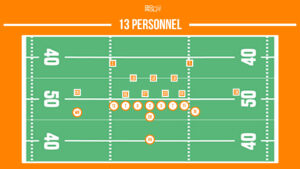
13 personnel, comprising one running back, three tight ends, and one wide receiver, is a run-heavy package that loads the offense with bigger bodied skill players. It’s not used often, but it is common in short yardage situations.
Breaking it down by position, 13 personnel includes:
- 1 RB
- 3 TEs
- 1 WR
How to use 13 personnel
Overload one side of the formation. Position all three tight ends on one side of the offensive line. This forms a wall of blockers for the ball carrier to use on a run play and forces the defense into a tough situation regardless of play type.
Add extra gaps to the defense. Regardless of how you align the tight ends, 13 personnel enables offenses to create opportunities in the run game.
Run play action to catch overcommitted defenses. When you line up in 13 personnel, defenses often take that as an indication you’re running the ball. Dialing up a play action pass on short yard and goal line situations can exploit defenses that overcommit to the run.
Challenge the defense to cover larger pass catchers. Your three tight ends are likely bigger bodies than typical pass catchers. 13 personnel presents an opportunity to call pure pass plays and let your tight ends display their catching abilities. If a large tight end gets lined up against a smaller defensive back, their size difference can create a mismatch in the offense’s favor.
What is 10 personnel?
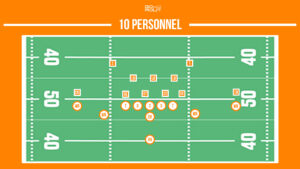
The 10 personnel package includes one running back, no tight ends, and four wide receivers, indicating a strong emphasis on the passing game. Despite the emphasis on passing, 10 personnel offers versatility allowing for both pass and run plays.
Breaking it down by position, 10 personnel includes:
- 1 RB
- 0 TEs
- 4 WRs
10 personnel places additional responsibility and pressure on the running back. They have to pick up for the lack of a tight end in this package. Simply being on the field is impactful as a running back in 10 personnel. It forces the defense to consider a potential running play and line up accordingly.
How to use 10 personnel
Showcase talented running backs. If your team has a true bell cow, or a skilled back who can juggle numerous responsibilities, 10 personnel is an offensive package where they can shine. Running backs have to pick up yards on the ground without the additional blocking and protection of a tight end. They also have to provide extra pass protection, picking up for the lack of tight end on the line.
Use the speed, quickness, and size of your receivers. 10 personnel is ideal for a roster of speedy receivers. Spreading out your offensive formation opens up the field for receivers to use their skillset to beat the defense. One quick move can lead to a chunk gain and momentum swing.
Leverage a larger running back against smaller defensive backs. Because 10 personnel leads the defense to send out a smaller unit, larger running backs can use physicality to gain yards. A running back built like Derrick Henry can shed tackles when they’re going up against smaller framed cornerbacks and safeties.
Pick up a first down on 3rd or 4th-and-long. When you’re forced into a third or fourth-and-long situation, 10 personnel opens up the field for a potential chunk play to move the chains.
Move down the field when trailing late in the game. If you’re down and need to score late in the game, 10 personnel can open the field through the air or on the ground. While you’re more likely to run long passing plays, the space may allow your running back to pick up 10 yards and a first down while getting out of bounds to stop the clock.
What is 23 personnel?
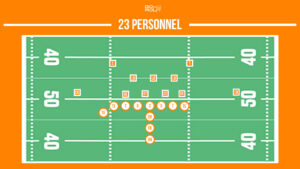
23 personnel consists of two running backs, three tight ends, and no wide receivers, and is commonly used in goal-line situations. This package aims to load the field with bigger bodies, gaining the advantage in power and strength on the line of scrimmage
Breaking it down by position, 23 personnel includes:
- 2 RBs
- 3 TEs
- 0 WRs
23 personnel is one of the least used offensive packages by percentage, but is another common look in short distance scenarios.
How to use 23 personnel
Power your team to a first down with inches to go. The combination of additional tight ends on the line of scrimmage and an extra body in the backfield provide the power to push forward for a hard earned first down on inches-to-go situations.
Score a touchdown on the goal line. Similar to a first down, the strength and additional blocking power from tight ends and a second back help move the ball forward in goal line situations. The defense can load the line to combat this look, but an additional three to four blockers gives the offense a fighting chance at generating enough momentum to score.
Run a pass play to catch the defense out of position. Because it’s a short distance, run-heavy look, defenses likely anticipate a play on the ground. Whether you motion a tight end or back wide as a threat through the air or run a play action, you can get bigger bodied receiving targets in a mismatch with slower, less skilled pass defenders.
What is 22 personnel?
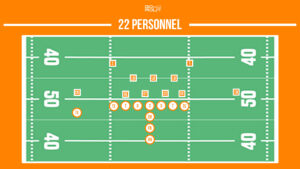
22 Personnel involves 2 RB, 2 TE, and 1 WR, a ‘jumbo’ set used almost exclusively for short-yardage running. This package favors the running game with three extra blockers, but there are opportunities to exploit weaknesses through the air.
Breaking it down by position, 22 personnel includes:
- 2 RBs
- 2 TEs
- 1 WR
22 personnel is not used often, but it’s impactful in certain situations.
How to use 22 personnel
Power through the defense with a downhill running play. The most common use of 22 personnel is downhill running for short yardage. Whether you’re on the goal line or looking for a first down, three additional blockers provide the push to give you an advantage on the line of scrimmage.
Get creative in play action. The defense often combats 22 personnel with larger, slower bodies. Tight ends, running backs, or the receiver can take advantage of a mismatch through the air. Draw up a convincing play action, and the offensive targets gain open space from the misdirected defense.
Run an end-around the speedy receiver. Defenses anticipate a power run up the gut. Send your speedy receiver in motion and hand the ball to them for an end around to fool the defense with a different ground game approach.
What is 20 personnel?
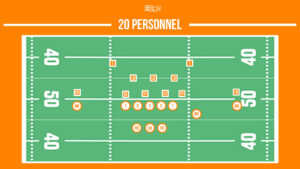
The 20 personnel package features two running backs, no tight ends, and three wide receivers, and is often used in under-center formations. It’s a personnel grouping that provides the offense with options and variation to confuse the defense.
Breaking it down by position, 20 personnel includes:
- 2 RBs
- 0 TEs
- 3 WR
Because there are no tight ends on the field, the offense loses pass and run-blocking security.
How to use 20 personnel
Attack the defense through the air. Three receivers provide ample targets for the quarterback to find. Combined with two running backs and creative play design, 20 personnel offers a wide range of pass play potential.
Get creative with your two running backs. Two players in the backfield equips offensive coordinators with a range of possibilities. They can be used as pass blockers to protect the quarterback or run routes as an additional target. Larger fullbacks can be a force in pass and run-blocking roles.
Challenge the defense with read options. Read options provide your offense with several potential moves. This places a lot of pressure on the quarterback to accurately read the defense and make the right decision.
How Offensive Personnel Packages Impact Opposing Defenses
Football teams use personnel groupings to create favorable match-ups on offense and force the defense to adjust and react. The fluidity and complexity of football mean that personnel matchups are not always straightforward and can change throughout the game.
Defenses often employ specific alignments to counter offensive personnel groupings, affecting the strategic framework of the game. Teams with flexible personnel can run or pass out of the same grouping, making it harder for defenses to predict plays. Situational factors significantly influence defensive alignments, especially in third down and long situations where defenses prioritize pass defense.
Examples of Defensive Strategy to Combat Offensive Personnel Groupings
Here are a few examples of how offensive personnel groupings impact the defense’s strategy:
- The 11 personnel grouping consisting of one running back, one tight end, and three wide receivers, is commonly countered by the nickel defense, which includes five defensive backs. Defenses counter 11 personnel with ‘Nickel’ (5 DBs) and heavier personnel (12/21) with ‘Base’ (3 LBs).
- 12 personnel, characterized by one running back, two tight ends, and two wide receivers, typically prompts a base defense alignment from the opposing team.
- When the offense uses ‘heavy’ personnel like 13 or 22, defenses are forced to add extra linebackers or linemen
Install Personnel Packages with GoRout’s Football Coaches Toolbox
Designing and installing personnel groupings is a tedious, time consuming process. Players need to know their position, roles, and responsibilities for each package. GoRout is here to help with a free downloadable Football Offensive Install Schedule.
This printable PDF template provides an outline to schedule numerous packages throughout multiple weeks and leave notes for implementation. When you put pen to paper and design a plan, it helps ensure you install every package necessary and make the most of your time.
This resource is part of a larger collection in GoRout’s Football Coaches Toolbox featuring several templates and documents to help navigate your coaching responsibilities.
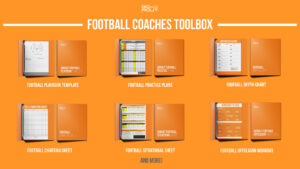
The Football Coaches Toolbox includes the following resources as free downloadable and printable PDFs delivered straight to your inbox:
- Football Playbook Template
- Youth Football Playbook
- Youth Football Defensive Playbook
- Football Practice Plans
- Football Scout Team Planner
- Football Game Week Schedule
- Football Depth Chart
- Football Pregame Agenda
- Football Charting Sheet
- Football Post-Game Grading Sheet
- Football Situational Sheet
- Football Situational Checklist
- Football Offseason Workout Plan
- Football Recruitment Sheet
- Football Wristband Template
Maximize Practice Time in Each Personnel Grouping with GoRout Scout
A schedule helps you plan out which personnel groupings to install when. That sets your team up for a successful session ahead of time. Regardless of resources, coaches are always looking for ways to maximize and get the most out of practice time.
GoRout Scout is an innovative football practice device that helps teams get through reps quicker, increasing the average reps per minute by three-times. The system allows coaches to have more time to teach and players more opportunities to develop.
Contact us for more information, or get a quote today!

FAQs on Football Personnel Groupings
What is 12 personnel in the NFL?
12 personnel is a football offensive package consisting of one running back, two tight ends, and two wide receivers. It’s one of the most commonly used and offensive personnel groupings, prevalent in all levels of football.
What is 13 personnel in football?
13 personnel in football is an offensive package consisting of one running back, three tight ends, and one receiver.
What are the 11 positions in football?
There are 22 total positions in football:
- 11 on defense , and
- 11 on offense
While formations create variation, here are the core positions for each side of the ball.
Defensive positions:
- Defensive end
- Defensive tackle
- EDGE
- Linebacker
- Cornerback
- Safety
Offensive positions:
- Center
- Guard
- Tackle
- Tight end
- Wide receiver
- Running back
- Quarterback
What is 10 personnel in football?
10 personnel in football is an offensive package consisting of one running back, no tight ends, and four wide receivers.
Share This Article
Related Articles




Free Playbook Template
Our downloadable template offers a sleek, detailed design with space for positional roles, play descriptions, and any play notes that you want to include.