Pitcher Catcher Communication Device: A Guide for 2026
Reading Time: 11 minutes


Reading Time: 11 minutes
A pitcher catcher communication device streamlines pitch calls between the battery utilizing digital systems. As technology continues to play a larger role in baseball and softball (among other sports), communication devices are becoming widely accepted and used across all levels of play.
In this resource, we will provide an overview of the pitcher/catcher relationship and how communication devices can improve performance on the field.
Continue reading to learn:
- Who calls pitches in a game
- Different methods of pitcher and catcher communication
- The technical evolution of pitcher catcher communication
- What a pitcher catcher communication device is
- Legal regulations and rules for pitcher communication devices
- FAQs on pitcher catcher communication devices
Does The Catcher Call The Pitches?
In the highest levels of play, specifically Major League Baseball (MLB), the catcher traditionally calls pitches. Depending on the level of play, league, experience, and other factors, pitch calling responsibilities vary.
In lower levels of play, from youth baseball and Little League through high school and college ranks, coaches tend to call pitches so players can focus on execution.

Taking Away Pitch Calling Responsibilities from Catchers in the MLB
Even in the MLB, with the emphasis on analytics in baseball, some teams are taking pitch calling responsibilities away from the catcher and placing it into the coaching staff’s hands.
During the 2025 season, the Miami Marlins started calling pitches from the dugout in an effort to lighten the mental load for young pitchers and catchers.
- Instead of the catcher, they have two coaches stationed in the dugout to make the call leveraging data and analytics.
- The coaches send the pitch call to the catcher, who relays it to the pitcher.
Different Methods of Pitcher Catcher Communication
As mentioned in the previous section, the method for making and delivering pitch calls varies by circumstance.
The three main methods of communicating pitch calls between catcher, pitcher, and coach are:
- Catcher calling the pitch
- Pitcher calling the pitch
- Coach/staff calling the pitch
| Method | Description |
| Catcher calling the pitch | The catcher calls pitches based on pre-determined game plan and strategy, and intuition regarding in-game and pitch-by-pitch adjustments. |
| Pitcher calling the pitch | The pitcher stands on the mound and calls the pitch using an electronic device, which is a less common method of pitch calling. Pitchers can also shake off signs as a way to control which pitch is called. |
| Coach/staff calling the pitch | Coaches use data, analytics, and other information to make pitch calls. The coach sends the call to the catcher, who relays to the pitcher. This reduces mental load on both the catcher and pitcher. |
Catcher calling the pitch
When the catcher calls pitches, coaches place trust in their players to understand the flow of the game and make smart decisions. Catchers gauge everything from a pitcher’s confidence in certain pitches on a given day to the umpire’s strike zone preferences.
Significant preparation goes into catchers calling the game, and the coaching staff ensures that it aligns with their philosophy and game plan. Both players (pitchers and catchers), as well as coaches, review opposing teams’ scouting reports and build a plan to attack each batter in pre-game meetings. With that preparation, coaches feel confident handing pitch-by-pitch decision making to their catcher.
Because of the knowledge, experience, and intuition required for calling pitches, it’s more common to see catchers tasked with pitch calling responsibilities in advanced levels of play. Coaches typically teach catchers to call the game starting at the high school level, with college and professional leagues determining who will call pitches based on what works best for their program.
Pitcher calling the pitch
With the introduction of pitch calling devices, pitchers have the ability to call their own pitches. This is relatively rare, most commonly seen in the MLB. Pitchers press a button or indicate the call on their device, which informs the catcher what they are going to throw.
Before the introduction of electronic pitch calling systems, and at all levels of play, pitchers held the power to decide what to throw, regardless of who called the initial signal. Shaking off signs, whether physical or digital, gives the pitcher final say on every pitch. Being convicted in the pitch call, as the pitcher, makes it more likely to be effective.
Coach/staff calling the pitch
Coaches call pitches when they want full control of the game. This is common both in youth leagues and travel teams through the highest levels of college competition, when players are still developing their skills and abilities on the field. In these situations, it makes sense for coaches to use their experience and knowledge of the game, allowing players to focus solely on executing the call.
As players progress and gain experience, coaches sometimes relinquish pitch calling duties, handing it over to the players on the field. This varies by level. Some high school and college coaches call pitches, while others place the trust in their battery. Coaches are there to support their players, regardless of who controls pitch calls.
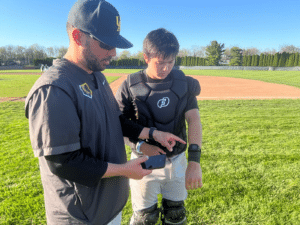
Some professional teams, including those in the MLB, have shifted to coaches calling pitches. Earlier in this resource, we mentioned the Miami Marlins approach to pitch calling. Two coaches sit in the dugout, equipped with data and additional information, make the call and relay it to the catcher, who sends it to the pitcher.
The Marlins state two main benefits for this coach to player communication:
- Stripping emotions and situational awareness from the pitch selection process
- Reducing the pitcher and catcher’s mental load
The Technical Evolution of Pitcher Catcher Communication
Communication between pitchers and catchers has evolved with the incorporation of technology into the game. Wearable communication technology is changing sports interactions, specifically within baseball and softball.
Let’s take a look at the history and evolution of pitcher catcher communication:
| Year | Description |
| Pre-1900 | Dating back before 1900, catchers used fingers and hand signals to call pitches |
| 2021 | NCAA launches initial use of one-way communication devices. |
| 2022 | PitchCom was introduced to MLB teams in 2022, allowing pitchers to receive pitch calls wirelessly. |
| 2023 | MLB allowed pitchers to use digital sending devices to select pitches themselves. Additionally, high school baseball (NFHS) introduced electronic pitch-calling, limited to the coach and catcher. |
| 2024 | NCAA expands the use of one-way electronic devices in college baseball, allowing players on the field or coaches in the third or first base boxes to initiate one-way communication and relay signals. |
| 2025 | Little League Baseball updates rules, allowing a one-way coach-to-catcher communication device on defense. The catcher still needs to physically relay the signal to their pitcher. |
| 2026 | The National Federation of State High School Associations (NFHS) changed the rules, permitting the use of one-way electronic communication devices for both the pitcher and catcher, and expanding wearable technology in high school baseball nationwide.
Coaches can send calls to the catcher and/or through a coach-to-player communication system, who can wear a pitch-calling watch or other pitch-calling device to receive it. |
Other Types of Pitcher Catcher Communication
Outside of technology for calling pitches, pitchers and catchers must communicate throughout practices and games to remain on the same page.
Here are a few ways that pitchers and catchers communicate:
| Type | Description |
| Pre-Game Strategy Discussions |
|
| In-Game Adjustments |
|
| Mount Visits & Timeouts |
|
| Situational Awareness, Game Management, & Defensive Alignments |
|
What Is A Pitcher Catcher Communication Device?
A pitcher catcher communication device is an electronic pitch calling system that allows catchers to send pitch calls directly to the pitcher, or vice versa. Modern systems use wearable technology for pitch calls.
In advanced leagues where catchers and pitchers make calls independently, these electronic pitch-calling systems prevent sign stealing while allowing clear, concise communication.
Benefits of a Pitcher Catcher Communication Device
Incorporating a pitcher catcher communication device can be a game changer for baseball teams and softball squads. It allows teams to communicate more effectively and speed up and secure the pitch calling process.
There are several benefits to using a pitcher catcher communication device, including:
- Pitchers receive signs faster, allowing more mental preparation time
- Secure, encrypted digital communication ensures opposing teams don’t steal signs
- Less confusion improves the game flow
- Reduced mental load on pitchers and catchers helps them account for other in-game adjustments
- Many systems operate without Wi-Fi ensuring calls go through no matter where the game takes place
- Devices can have strong battery life, ensuring they don’t turn off in the middle of a game

Legal Regulations and Rules for Pitcher Catcher Communication Devices
As they continue to grow in popularity, it’s important for coaches and programs to understand the rules and legal regulations for pitcher catcher communication devices within their league. No special licensee is needed for pitch call systems in baseball, but certain restrictions are in place.
Regardless of the league, pitch call systems must not allow two-way communication or data exchange. Teams must verify compliance with local electronic-device policies and check with their league’s governing bodies for any additional restrictions.
Let’s take a look at the pitcher catcher communication rules for the following levels of play:
- Youth Leagues
- Travel Leagues
- High School
- College
- Professional Baseball (MLB & MiLB)
Youth Leagues
Many youth leagues have adopted some form of use for electronic pitcher catcher communication devices or pitch calling watches. However, not all leagues allow the use and some have additional restrictions.
Here are some of the most popular youth baseball organizations and their regulations on electronic communication:
| Organization | Rules |
| Little League Baseball | Allowed; Coach-to-Catcher only (Rule 3.17) |
| Cal Ripken Baseball | Allowed, Coach-to-Catcher only (2025 tournament rules) |
| Babe Ruth | Not allowed |
Travel Leagues
Travel baseball describes a wide range of tournaments, leagues, organizations, and governing bodies. There are often multiple levels of play within each organization, ranging from youth travel baseball all the way up to 18U.
With so many factors in play, the legality of pitcher catcher communication devices varies.

Image courtesy of Luke Fancher on Unsplash
Here are some of the most popular travel leagues and regulations:
| Organization | Rules |
| USSA | Allowed; All Positions (Rule 7.01.M) |
| Triple Crown | Allowed; All Positions (Tournament Rules) |
| Game Day USA | Allowed; All Positions (Section 39) |
| Perfect Game | Allowed; All Positions (Rule 2, Section 8) |
| NCS | Allowed; All Positions (Tournament Rules) |
| Prep Baseball | Allowed; Coach-to-Catcher (Tournament Rules) |
| Top Gun Sports | Allowed; All Positions (Tournament Rules) |
| Prospect Select | Allowed; Per Event Basis (Tournament Rules) |
High School
The National Federation of State High School Associations (NFHS) is the national leader and advocate for high school athletics, and writes playing rules for sports, including baseball and softball.
NFHS allows one-way communication systems for high school baseball, and NFHS Rule 1-6-2 governs one-way communication in baseball. This rulea permits one-way communication devices between the coach and catcher.
Certain state associations have their own rules for electronic communication, overriding the NFHS restrictions.
Here are the pitcher catcher communication device rules for high school teams:
| Organization | Rules |
| NFHS | Allowed; Coach-to-Catcher AND/OR Pitcher (Rule 1-6-2) |
College
The National Collegiate Athletic Association (NCAA) is the largest and most well-known college sports association in the U.S. It’s divided into three sub-divisions: Division 1 (DI), Division 2 (DII), and Division 3 (DIII). NCAA teams follow the same rules for electronic devices, regardless of the division.
Other major college sports associations include the National Association of Intercollegiate Athletics (NAIA), National Junior College Athletic Association (NJCAA), and California Community College Athletic Association (CCCAA).

NCAA rules set the standard for college baseball, with all other organizations following the same guidelines. Here are all of the major college athletic associations:
| Organization | Rules |
| NCAA | Allowed; All Positions (Rule 5.16 Note 1) |
| NAIA | Allowed; All Positions (Follows NCAA Rules) |
| NJCAA | Allowed; All Positions (Follows NCAA Rules) |
| CCCAA | Allowed; All Positions (Follows NCAA Rules) |
Professional Baseball (MLB & MiLB)
Major League Baseball (MLB) and Minor League Baseball (MiLB) are the two largest professional baseball leagues in the United States. In 2021, the MiLB tested pitcher catcher communication devices and in 2022 the MLB incorporated them into regular play.

Photo courtesy of Jon Matthews on Unsplash
At these professional levels, the term “pitcher catcher communication device” is most accurate. Where other levels of play vary in who most commonly uses communication devices, MLB and MiLB rules only allow the pitcher and catcher to transmit pitch calls to one another.
Here are the specific MLB & MiLB pitcher catcher communication device rules:
- Each team is provided with three transmitters for sending signals and 12 receivers
- Only two (2) transmitters are allowed on the field at any one time, typically reserved for the catcher and pitcher
- Five receivers are allowed on the field at any one time, giving certain defensive players the ability to hear pitch calls
- No one in dugout is allowed to call or hear pitches using electronic devices
Currently, only MLB and AAA teams have access to pitch calling technology. Lower levels of MiLB, from AA down, aren’t included in the league’s contract.
Other independent professional leagues within the United States and international professional leagues around the world set their own regulations for electronic communication between pitchers and catchers.
GoRout Diamond: An Effective Pitcher Catcher Communication Device
GoRout Diamond offers an efficient, effective pitcher catcher communication device for baseball and softball teams of all levels. It provides a full digital system for making pitch calls through encrypted wristband devices and a tablet app.
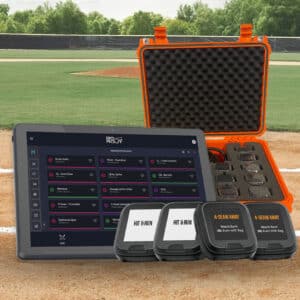
GoRout’s pitch calling system comes in two user-friendly parts:
- Coaching App. Build custom messages (up to 40 characters) for tailored pitch calls and defensive communication through the app.
- Player Wristbands. Encrypted player devices with a 4-way privacy screen to protect calls. Pitch calls display on player wristbands instantly upon selection.
Pitch calls transmit in under a second, and one-way transmission ensures compliance with all major governing bodies. The system uses a leading national cellular network, ensuring connectivity at any and all locations without relying on WiFi.
Every device comes with a 100% full-coverage replacement warranty, including if a device breaks (with a few minor exceptions you can read about in our Terms of Use).
GoRout Connect: Analytics to Enhance Performance
GoRout partners with AWRE Sports to provide professional-grade analytics through GoRout Connect. The newest operating system equips coaches and players with detailed performance feedback, enhancing communication and execution on the field.

GoRout Connect features three automated baseball pitching charts using data from Diamond devices, including:
- Strike Zone Maps. Visual displays of the percentage that each section of the strike zone is hit. Show where your pitchers are most effective, and help identify what specifically they need to work on.
- Spray Charts. Visual representation of where pitchers were hit, and to what part of the field they were hit to. Identifies which pitches are being hit and where to help pitchers refine the way they attack batters.
- Pitch Intent vs. Result. Reports actual results of a pitch compared to the intended call. Helps coaches identify which areas to work on and create customized bullpen sessions to improve execution and performance.
GoRout is a leading sports technology provider, specializing in communication devices for baseball, softball, and football. Get a quote for your GoRout pitcher catcher communication device today!
Pitcher Catcher Communication Device FAQs
Do MLB pitchers and catchers have communication devices?
Yes, pitchers and catchers in Major League Baseball (MLB) use electronic communication devices to send and receive pitch calls.
What is the pitcher to catcher communication device?
A pitcher to catcher communication device is an electronic system that digitally transmits pitch calls between the pitcher and catcher.
This removes the need for physical signs and reduces the risk of opponents stealing signals.
Are MLB catchers wearing earpieces?
Yes, MLB catchers wear an earpiece to hear and receive communication and signals from the pitcher. They also use it to confirm the button they selected is the appropriate pitch.
How does the pitcher get the electronic signal from the catcher?
Through pitcher catcher communication devices, the pitcher can receive a signal from the catcher in multiple ways:
- A coach in the dugout transmits the call electronically through a coach’s transmitter to the catcher, who relays the call to the pitcher.
- The catcher directly calls a pitch using an electronic transmitter that sends to a receiver worn by the pitcher
- The pitcher directly calls a pitch using an electronic transmitter that sends to a receiver worn by the catcher so both players are on the same page
Share This Article
Related Articles



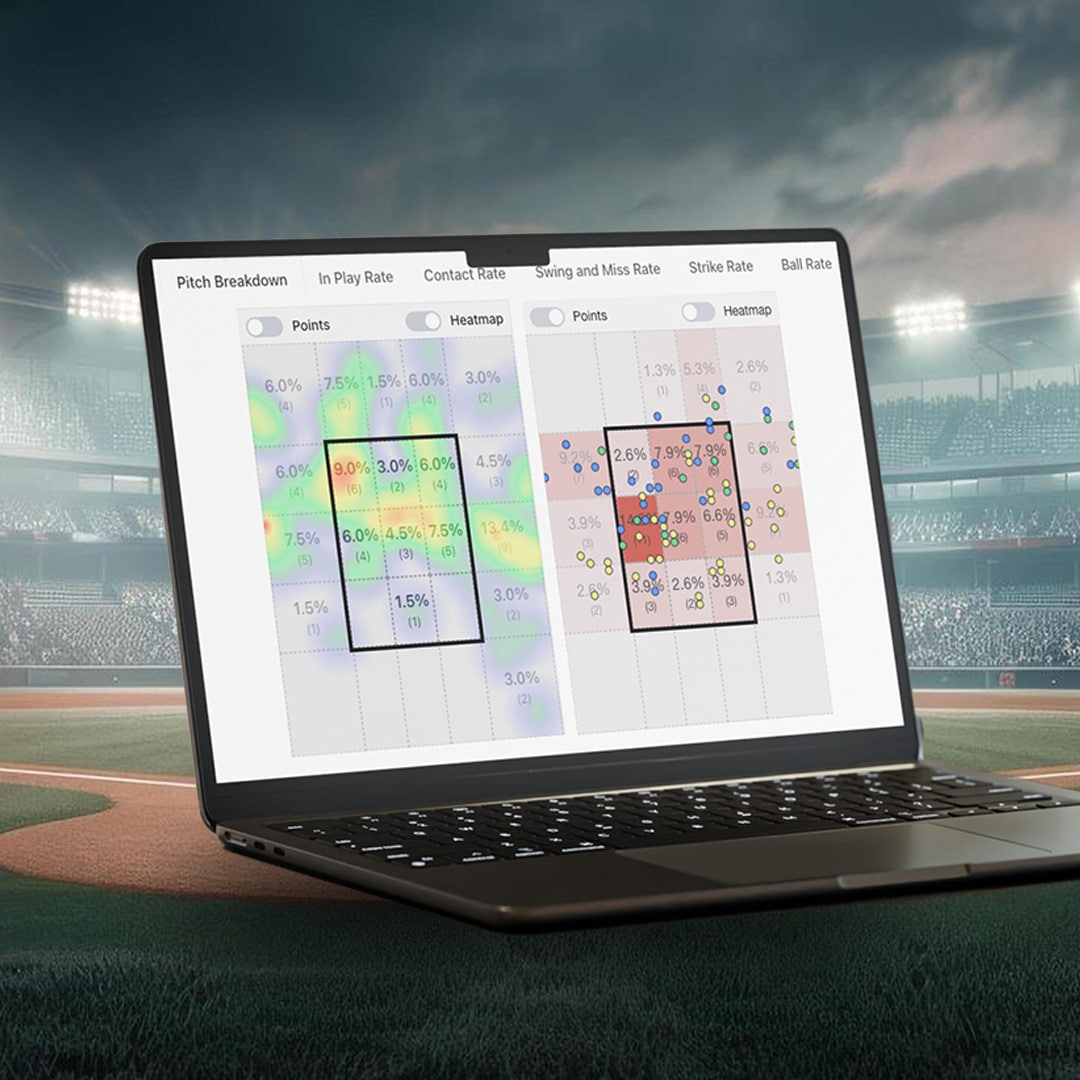
Big-League Analytics in your dugout for free
With GoRout Connect, GoRout Diamond customers receive access to AWRE Sports suite of analytics tools for free!