Football Practice Script: How to Build One That Works
Reading Time: 9 minutes


Reading Time: 9 minutes
It’s Tuesday afternoon. Your football practice plan is on the whiteboard, the periods are mapped out, and the staff is ready.
Then the scout team coordinator realizes the cards for the opponent’s base defense haven’t been printed. Players stand in clusters at midfield. You’re burning valuable time before a single ball gets snapped.
A football practice script is the system that prevents exactly that. Where a practice plan shows you when each period happens, a script tells you what happens inside each period: every play, formation, exercises and look, in sequence, before you ever step on the field.
This article covers what a football practice script is, how to build one step by step, and what to put in each period. You’ll also see how to script offense and defense separately.
What Is a Football Practice Script and Why Does It Matter
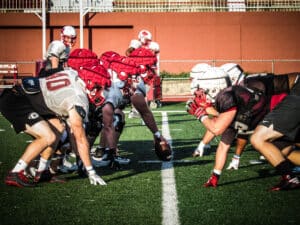
A football practice script is a sequential list of specific plays, formations, and looks assigned to each practice period. It’s not the same as a schedule (which shows time blocks) or a structured practice plan (which names the periods). A script fills each period with specific content: play by play, rep by rep, so coaches and players know exactly what’s coming and when.
Good football practice planning starts with a script, which is more than just a schedule. Football coaches who script in advance run more reps, fix problems faster, and arrive at the field with their entire staff aligned on the week’s priorities. Without one, periods fill with improvised decisions that eat into the time teams never get back.
The most extremely organized programs script every period before the week begins. That consistency is what separates programs that improve across a season from those that repeat the same mistakes.
How to Build a Football Practice Script: Step by Step

Building a strong football practice script follows a repeatable process. Every program, from youth football to college, can apply the same five steps to turn film review into a practice that wins the week.
Step 1: Self-scout and identify priorities
Start with a self-scout review of the film from the last game or session. Identify where the football team broke down: in protection, run fits, coverage rotation, or any other area.
This is more than just listing mistakes. It’s about diagnosing which problems, if left unaddressed, will cost you in the next game. Focus on one or two critical issues and let those drive every scripting decision that follows.
Step 2: Map periods to priorities
Decide how many periods go to offense, defense, and special teams, and allocate time per period. Most high school programs run 90 to 120 minutes; youth programs typically run 60 to 90 minutes, depending on age and conditioning level.
Give the periods carrying the most critical work the most scripted reps. Don’t spend time reinforcing what’s already working.
Step 3: Script offense and defense separately
The offensive script lists every play and formation for each offensive period, in order. The defensive script lists every coverage shell and package for each defensive period. Each coordinator owns a separate document.
Treat them as one, and you’ll create confusion in team periods. Explaining conflicting expectations on the fly wastes the time you’ve carefully planned.
Step 4: Build the scout team script
List the specific plays and formations the scout team must simulate during team periods and attach a card to each entry. Game preparation depends on this step more than any other.
Without a scripted scout team, starters face guesswork instead of realistic game situations. The reps they get won’t reflect what they’ll see on Friday night.
Step 5: Load the script into your delivery system
For paper-based programs, this means printing, cutting, and sorting cards by period before the team arrives. In GoRout programs, coaches drag and drop play cards into the scripting app, and the system automatically delivers them to player wrist devices.
The Core Practice Periods and What to Script in Each

Every practice breaks into distinct periods. A well-built football practice script addresses each one deliberately. Here’s what to include, and what to leave out, in each phase of a typical session.
Warm-ups and pre-practice
The physical warm-up doesn’t need a script. Use this window to script communication drills and formation alignments so players are mentally prepared before the first live rep.
This is also the right time to avoid injury, particularly for kids who need proper preparation before intensity ramps up. An injury early in the week can force last-minute changes to your entire scripted plan, so don’t treat this phase as dead time.
Script water breaks into the schedule too. Don’t make it an afterthought. Make it a built-in part of the practice flow. Set your effort and intensity standard here. Players hold to it more consistently when you establish it at the start.
Individual period (Indy)
The Indy period is where each position group isolates and repeats individual techniques. A typical session includes five to eight specific drills per group.
- Quarterbacks work on footwork and release mechanics
- Receivers work release and route stems
- Offensive linemen cover hand placement in blocking assignments, and
- Defensive backs work their backpedal and break.
Every position group runs its own scripted sequence in small groups, cutting standing time and maximizing reps.
Group period
Group periods bring as many groups together as possible for coordinated drills. Examples include QB and receivers on route running, OL and DL on run blocking, and linebackers and safeties on coverage reads.
Script enough reps to fill the period with no standing time between groups. 7-on-7 football practice is one of the most effective formats for developing passing-game timing at speed.
Team period
Team period is where the week’s film priorities finally get their reps. Offense runs scripted team drills against a scout defense; defense runs scripted coverages against a scout offense.
If each rep takes about 45 seconds and you have 20 minutes of team time, you’ve got room for roughly 25 to 30 scripted plays. Adjust that number based on your actual tempo and how quickly your team transitions.
Special teams
Script two kicking-game elements per session and rotate them across the week.
- Monday covers kickoff and kickoff return
- Tuesday covers punt and punt return, and
- Wednesday covers field goal and field goal block.
That rotation guarantees the full kicking game gets reps each week instead of getting squeezed into the last five minutes on Friday.
Cool-down
Use this block for low-intensity reps of plays that need alignment correction. Three to five reps of a formation or play that was misexecuted earlier in practice, run at half speed, gives players a final chance to install the correction before they leave the field.
How to Script Offense, Defense, and Special Teams Separately
Each phase of the game needs its own script, built by its own coordinator. Without that separation, preparation becomes reactive, and the week’s priorities never fully get their reps.
| Phase | Who builds it | Organized by | Key focus |
| Offense | Offensive coordinator | Down and distance (1st and 10, 2nd and short, red zone, two-minute) | Address the opponent’s defense; develop techniques from film review |
| Defense | Defensive coordinator | Opponent’s offensive tendencies (first down, red zone, motion usage) | Rep coverages and packages that match what starters will see on game day |
| Special teams | Special teams coordinator or designated assistant | Kicking game elements rotated across the week | Make sure every kick, return, and coverage rep gets practiced, and nothing gets skipped |
A well-built football play calling system makes offensive scripting faster each week because the terminology and structure are already in place. Coordinators spend less time organizing and more time sequencing the right plays.
All three scripts need to be reconciled at the start of each week. The offense should know what looks the defense will give, and vice versa. Skip that alignment step, and team periods become reactive instead of deliberate.
The effort put into each individual script won’t translate into the cohesive game preparation the team needs to win.
Scout Team Scripting: Where Most Coaches Fall Short
Scout team scripting means creating a specific sequence of opponent plays and formations for the scout team to simulate during team periods. Done right, starters face realistic game situations. When scout team scripting is incomplete or wrong, they face guesswork.
The most common mistake is giving scout-team players verbal descriptions of the opponent’s plays without visual aids. Players misremember the alignment, starters get wrong looks, and the entire team period delivers less than it should.
Scripting each scout team card in advance is essential. Every scout team player gets a card showing exactly where to line up, which gap to attack, or which route to run. A football scout team planner lets programs build and organize those cards before the week begins.
Common Scripting Mistakes and How to Fix Them
Even experienced coaches run into the same scripting problems week after week. Catching these early is one of the most useful things a staff can do to improve over the course of a season.
- Scripting too many plays. A 90-minute practice can’t run 60 scripted plays in sequence. Over-scripting forces skipped plays mid-period, disrupts rhythm, and leaves players unsure what to expect next. Script only what fits your actual time and tempo.
- Not scripting defense. Many coaches script offense in detail and leave defense to respond reactively. Defenders never get to rehearse specific coverages and stunts before a live team period. Build a defensive script tied to the opponent’s offensive tendencies.
- Leaving special teams to the last five minutes. If special teams scripting doesn’t happen at the start of the week, it won’t happen at all. Close games are often decided by one kicking-game phase that didn’t get enough reps. Assign a coordinator to own the special teams script on Monday alongside offense and defense.
- Not reconciling scripts across coordinators. Offensive and defensive scripts that don’t account for each other create confusion in team periods. Hold a brief alignment meeting at the start of each week before anything goes into the delivery system.
- Not adjusting after each session. A script that worked on Monday may not address what broke down in Tuesday’s team period. Review the film the same evening and adjust the next session’s script before the following day’s practice begins.
Scripting rewards consistency. Programs that treat each week’s script as a complete preparation system, instead of a list of plays to get through, show up to game day ready to execute under pressure.
Free Resources to Start Scripting This Week
These GoRout resources are free to download and ready to use:
- Free football practice plan download: a ready-to-use practice structure with period names and time blocks built in.
- Football scout team planner: a structured tool for scripting opponent looks and scout team assignments.
- Free football wristband templates: printable wristband inserts for paper-based play call systems.
- Free football playbook template: a blank play sheet with sample run and pass plays and defensive alignments for building your own scripted blocks.
Conclusion About Football Practice Script
A strong football practice script follows a clear workflow:
- Film review sets the week’s priorities,
- The script translates those priorities into sequenced reps, and
- A reliable delivery system gets those reps onto the field without wasted time.
Programs that script every period give their players more opportunities to execute correctly under pressure before game day arrives. Programs that script the scout team give starters realistic looks, instead of guesswork.
FAQs About Football Practice Script
What is a football practice script?
A football practice script is a pre-built, sequential list of specific plays, formations, and looks assigned to each period of practice. Unlike a practice plan, which shows time blocks, a script fills each period with exact content so coaches and players know what every rep will be before practice begins.
How long should a football practice script be?
It depends on your practice duration and tempo. In a 90-minute practice, a realistic script covers roughly 25 to 35 plays in team periods, plus five to eight drills per position group during individual periods. Script only what fits your actual tempo since over-scripting leads to skipped plays and wasted transitions.
Should defense be scripted separately from offense?
Yes. The offensive script and defensive script are two distinct documents built by different coordinators. The offensive script organizes plays by down and distance. The defensive script organizes coverages and packages to match the opponent’s tendencies. Reconcile both at the start of each week before any live reps are run.
What is scout team scripting in football?
Scout team scripting means building a specific sequence of opponent plays and formations for reserve players to simulate during team periods. Each scout team player gets a card showing exactly where to line up and what to do, so starters face accurate representations of the opposing offense or defense rather than guesswork.
What’s the best way to distribute practice scripts to players?
It depends on your program’s resources. Paper programs print, cut, sort, and distribute cards by period before practice. Digital programs use a platform like GoRout Scout, which pushes each scripted play card directly to player wrist devices via cellular signal: no printing, Wi-Fi, or manual card handouts during transitions.
How do you adjust a football practice script mid-week?
Review film after each session and identify what broke down. Adjust the next day’s script to address the most critical errors before they become habits. A script is a living document. The goal is to prepare your team for success, which sometimes means rebuilding one phase overnight.