Softball Hitting Techniques: The Complete Coaching Guide (2026)
Reading Time: 13 minutes


Reading Time: 13 minutes
Softball hitting techniques are the mechanical and mental skills that help a batter make solid contact against live pitching more consistently and under pressure.
Without locking in the fundamentals, talented players may struggle at the plate and fail to reach their full potential. This guide covers essential techniques for softball coaches to teach and players to master, including:
- Stance
- Load
- Bat path
- Pitch recognition, and
- Drills that turn a raw swing into a powerful swing you can repeat.
Why Is Softball Hitting Technique Important?
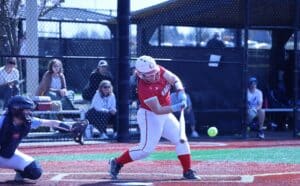
Consistent hitting technique ensures softball players have control of their entire body throughout the duration of their swing. It creates a repeatable motion that becomes second-nature through hard work and continuous practice. Players with proper hitting technique tend to have less swing and misses, and put the ball in play more often than not.
Two variables drive almost every hitting outcome in softball: contact rate and power.
- Contact rate measures how often a batter makes contact with the ball. It’s determined by the following formula:
- Contact rate = # of pitches where contact was made / total swings
- Power refers to how hard and far a batter hits the ball when making contact. It’s often measured by extra base hits and home runs. Stats that help determine a batter’s power include exit velocity and launch angle.
The best hitters in softball build proper technique to hit for contact and power. Every drill and cue in this resource targets one of those two components.
How Do You Determine If A Player Has Proper Hitting Technique for Softball?
You can identify proper hitting technique in softball by analyzing a batter’s swing over multiple pitches, at-bats, games, and/or practice reps. A good swing and a great one often look similar at first glance. The difference becomes apparent with more repetitions.
Great hitters repeat the same efficient pattern pitch after pitch, drilled until the proper form is automatic. Poor hitting technique often leads to inconsistent swings with each pitch. Some players get by with talent alone, but at the highest levels of softball it’s rare to find success without sound hitting technique.
Watch for these signs a hitter’s technique needs attention:
- Inconsistent contact point that shifts from pitch to pitch
- Weak ground balls to the infield instead of line drives on pitches middle-in
- Late swings against average fastball velocity
- Excessive head or shoulder movement during the load
- A swing that loses control under two-strike counts
What Components Make Up Proper Softball Hitting Technique?
Proper technique begins the moment a batter steps into the box and ends after a complete follow-through. In the following sections, we’ll break down each components of softball hitting technique, including:
- Batter’s box mechanics and stance fundamentals
- Load mechanics, back leg drive, and hip rotation
- Bat path and hand path
- Pitch recognition, timing, and mental approach
Batter’s Box Mechanics and Stance Fundamentals
A batter’s stance is the foundation every other hitting technique builds on. Stance determines everything from swing speed and plate coverage to physical and mental relaxation. A tense, rigid stance will likely result in a stiff swing and slow bat speed. Relaxed, athletic batting stances often lead to smooth, effective swings.
The various aspects of a batter’s stance in softball include foot placement, grip, and posture in the batter’s box.
Foot placement and plate coverage
Foot placement inside the batter’s box controls a player’s plate coverage more than any other variable. A hitter standing too far off the plate struggles with outside pitches, while one crowding it gets jammed inside.
A normal, athletic batting stance consists of the following positioning:
- Feet shoulder-width apart
- Knees bent slightly
- Front shoulder aligned with the pitcher for better contact
- Elbows pointed down at the beginning of the stance
- Standing mid-box between the front and back chalkline
- Distance from the plate should let the barrel reach the outer third of the zone at full extension
Grip and hand positioning
Grip and hand alignment directly affect bat speed and control. A proper grip involves lining up the knocking knuckles on both hands to allow full wrist rotation without restricting the hand path. Keep the grip pressure loose, at roughly a 4 out of 10, until the swing starts. Players should hold the bat in their fingers for better control.
Hand positioning varies by player and specific scenarios. Some prefer to choke up further on the handle every swing while others hold as close to the bottom as possible. In two-strike counts or when players need to protect at the plate, you can advise players to choke up and shorten their swing.
Posture, balance, and weight distribution
A player’s posture, balance, and weight distribution impact offensive performance as much as the physical swing path.
Weight distribution at setup should sit close to 50/50, with a slight bias toward the back leg as a hitter matures in high levels of play.
Proper posture includes:
- Soft, slightly bent knees
- Level hips
- Spine tilted slightly toward home plate
Head position plays a major role in a player’s hitting technique and balance. Eyes should stay level and still, since head movement makes the ball harder to track out of the pitcher’s hand. Players should keep their head still and eyes behind the barrel during the swing.
Five common stance errors that show up across youth and high school hitters include:
- Standing too upright, which limits hip rotation and rotational power
- Weight sitting entirely on the front foot before the pitch
- Hands set too far from the body, restricting the hand path
- Excessive head movement during the stance and load
- Feet positioned too close together, hurting balance through the swing
Stance checkpoints by skill level
| Checkpoint | Youth (8U-12U) | High School | College/Travel |
| Foot width | Shoulder-width | Slightly wider | Individualized |
| Grip pressure | Loose, relaxed | Controlled firmness | Position-specific |
| Weight distribution | 50/50 | Slight back-side load | Back-side dominant |
| Knee bend | Moderate | Athletic, reactive | Deep and loaded |
| Head position | Eyes level | Chin tucked, eyes level | Still, locked in |
Load Mechanics, Back Leg Drive, and Hip Rotation

The lower body serves three essential functions in proper hitting technique:
- The load
- Back leg drive, and
- Hip rotation
The load: timing, direction, and depth
The load is the backward shifting of weight a hitter uses to store energy before the swing. Its timing must matchup with the pitcher’s delivery.
- If a player loads too early, they can’t adjust to different pitches.
- Loading too late makes it hard to get any power behind the swing.
A good load shifts weight toward the back foot without drifting the body backward, timed to finish as the pitcher releases the ball.
Back leg drive and hip coil mechanics
The back leg is the engine of the swing. Weight settles into the inside of the back foot, the knee pinches slightly inward, and the hips coil against a stable lower half, storing energy the way a twisted rubber band stores tension.
Sequencing hip and shoulder rotation for maximum power
Power comes from the sequencing of a batter’s hip and shoulder rotation. Developing core strength, leg power, and grip strength enhances hitting performance. Without proper hip and shoulder sequencing a player can’t maximize their power, no matter how strong they are.
Proper sequencing looks like:
- Hips rotate first
- Shoulders follow
- Hands trail until the last instant before contact.
If a player open the hips too early, their bat path gets long and slow.
Cues and tips coaches use to fix rotation mid-practice:
- “Squash the bug” to reinforce back foot rotation
- “Belly button to the pitcher” to check hip rotation timing
- “Let the hands lag” to prevent early arm extension
- “Stay closed longer” to correct a front shoulder flying open
Bat Path and Hand Path
Bat path and hand path are the two most important components of a batter’s arms and upper body in their hitting technique.
What is bat path and why does it matter?
Bat path is the route the barrel travels from load to contact, determining whether a hitter squares up the ball or mishits it. A short, direct bat path produces more consistent contact than a long, looping one.
Three swing shapes show up most in youth and high school hitters:
- Casting swings extend the arms too early.
- Pull-heavy swings drag the barrel around the body instead of through the zone.
- A direct-to-contact path keeps the knob pointed at the ball as long as possible, which is the shape every hitter should aim for.
What is hand path and why is it important?
Hand path describes how the hands travel from the load to the ball. Staying inside the ball is what keeps the bat path short. When players loop their hands and drift outside the ball early, their swing loses power and plate coverage.
To aid with their hand path, players should focus on tucking their back elbow in tight to their body while swinging. In addition, a full follow-through (swinging from shoulder to shoulder) is important for maintaining balance and power in the swing.
Common hand path errors and how to fix them
| Problem | Root Cause | Correction Drill |
| Casting (arms extend early) | Disconnected hands from body | Towel drill, hip-to-ball drill |
| Rolling over (weak grounders) | Wrist roll at contact | Stay-through-the-ball cues, tee work |
| Uppercut (pop-ups) | Dropping back shoulder | High tee drill, mirror work |
| Pulling off the ball | Front shoulder flying open | Opposite-field tee work, hip wall drill |
Hand path work carries over into specialty skills too. Slap hitting uses a different hand path for lefties to create pressure on the defense. It’s worth exploring once a hitter has the standard bat path down.
Pitch Recognition, Timing, and Mental Approach
Success at the plate isn’t solely dependent on physical skills. Three important mental aspects of softball hitting technique include:
- Pitch recognition
- Timing
- Approach
What is softball pitch recognition?
Pitch recognition in softball is a batter’s ability to identify what type of pitch is being thrown and the location it’s traveling towards. This starts before the ball leaves the pitcher’s hand.
Pitch recognition involves reading the pitcher’s release point, arm speed, and spin. Hitters who wait until the ball is halfway to the plate to identify pitch type are already too late.
The strike zone breaks into four quadrants:
- Up-and-in
- Up-and-away
- Down-and-in, and
- Down-and-away.
Recognizing which quadrant a pitch targets early gives a hitter more time to commit or lay off.
Four cues to help softball players pick up pitch type early include:
- Watch the release point
- Notice arm speed differences between fastballs and off-speed pitches
- Track spin direction as the ball leaves the hand
- Identify grip variations visible before release
What is timing in softball hitting technique?
Timing is the synchronization of a batter’s load, stride, and swing with the speed of a pitcher’s motion and delivery. It determines whether a player makes solid contact, or is ahead or behind of the pitch.
Timing depends on three checkpoints:
- Front foot landing,
- The trigger point, and
- Launch position just before the swing.
A repeatable stride toward the pitcher and a well-timed front foot are often what separate a hitter who’s on time from one who’s rushed or behind.
Softball hitting mentality: Zone awareness and count-based approach
Mental approach matters as much as mechanics as the count changes. A one-pitch-at-a-time mindset keeps a hitter locked in.
The specific scenario often dictates a batter’s mental approach:
- Early in the count, players can be more aggressive in attacking pitches they like.
- If a pitcher struggles with control and command, players should remain patient. Coaches should encourage players to wait until they find a pitch in the strike zone and avoid chasing early in the count.
- In two-strike counts, batters should have a shortened, defensive swing focused on contact over power.
How to Build Proper Softball Hitting Technique: Soft Toss, Tee Work, and Live Reps

Every hitting session should move through a clear progression. Typical hitting progressions begin with stationary drills including tee work, soft toss, and front toss, before moving into live batting practice. Each stage builds upon the previous, working toward game-realistic contact.
Tee work: the foundation of every practice
Tee work establishes the foundation of proper hitting form. Utilizing stationary batting tees never gets old because it isolates one variable at a time. It allows hitters to set the tee at different heights and locations to work on specific mechanics or improve flaws without timing a pitch.
Soft toss: timing, angle, and variations
Soft toss introduces timing back into the equation while keeping the pitch predictable. The tosser kneels roughly six feet away at a 45-degree angle, tossing underhand into the zone.
Instruct players to focus on the following points:
- Track the ball out of the tosser’s hand,
- Load on time, and
- Hit the ball hard through the middle.
Soft toss is one of the most important things a coach can build into early-season practice, and it stays among many coaches’ favorite drills at every level.
As a simple drill, it needs almost no setup and works in nearly any space.
Front toss and live BP: building game-speed reps
Front toss adds some velocity and front-facing tracking, bridging the gap between soft toss and live pitching. Live batting practice against a coach or pitcher introduces the timing and recognition challenges hitters face in games.
These two stations are often the final components of your offensive practice block.
Six drill variations coaches can rotate through a single session include:
- Tee work at three different plate locations
- Soft toss from behind an L-screen
- Front toss with different speeds mixed in
- One-handed swings for bat path isolation
- Two-strike approach BP with a defensive focus
- Live BP with count-specific situations called out
Building a complete youth softball practice plan with hitting stations keeps every player moving without long gaps, and the complete guide to softball hitting fundamentals is a useful reference if you want to build out a full season plan.
Softball Hitting Drills to Build Technique
There are numerous hitting drills that help build proper technique. In the sections below, we’ll break down a few drills including:
- Knee drill
- Road map drill
- Tracking & timing drill
- See saw drill
- Slow to fast drill
- Half turns drill

The Knee Drill
The knee drill isolates the hand path by removing the lower half entirely. With the back knee down, a hitter generates bat speed purely from the hands, shoulders, and core.
- Kneel on the back knee with the front leg planted and bent
- Set up in a normal stance position from the waist up
- Have a partner soft toss from roughly 10 feet away
- Focus on keeping the hands inside the ball through contact
- Drive the barrel directly to the ball without casting the arms
- Repeat for 10 to 15 reps per set, alternating pitch locations
The Road Map Drill
The road map drill helps players visualize their contact spot by using a ball or object as guiding point.
- Get into your batting stance
- Find your contact spot (not too far back on the plate or out in front, somewhere in the middle)
- Take your bat to mark or identify on the ground where your contact spot is located
- Place a ball or object at the contact spot to use as a visual “road map” or guiding point
- A coach or player throws a pitch or soft toss
- Aim to make contact at the spot where the ball is laying on the ground
The Tracking & Timing Drill
The tracking and timing drill uses two plates to improve timing and contact point.
It involves placing two plates on the ground, one several feet in front of the other. The front plate simulates a fast pitch while the back plate simulates a slower pitch.
A coach or player serves as the front tosser, and the drill can be done in live batting practice or using a pitching machine.
- Start at the front plate and take a round of ten swings timing the “fast pitch”
- Move to the back plate and take a round ten swings timing the “slow pitch”
- Switch between the front and back plate each pitch so that five swings are from the front plate and five swings are from the back
The goal of the drill is to teach the hitter to time pitches based on how they track it. It gives them a feel of various pitch speeds so they can understand how to make quick adjustments.
The See Saw Drill
The see saw drill is a quick and easy way to help players establish a solid bat path to the softball. It can be done on a tee or with soft toss or live pitching.
- Start with the knob of the bat facing the catcher in a normal batting stance
- Point the knob of the bat towards the pitcher
- Return to the first position
- Repeat the process from pointing the bat at the catcher to pointing at the pitcher (as many repetitions as you want)
- On the final repetition, complete a full swing and make contact with the ball
The Slow to Fast Drill
The slow to fast drill integrates a slow load into a fast swing. This drill aims to establish a controlled, balanced body through the entirety of the swing. Many hitters are too fast with their stride, which leads them to shift weight out onto their front foot for an unbalanced swing.
Using a batting tee, the slow to fast drill helps players perfect their stride for a controlled swing.
- Focus on a slow load and stride
- As the stride foot is landing, increase to full speed for the swing, contact, and follow through
The Half Turn Drill
The half turn drill focuses on using the entire body for power, helping players get the most out of their swing. It’s a simple drill that doesn’t require a ball or actual swinging motion.
- Hold a bat vertically against your back leg and shoulder
- Place your back hand on the barrel and your front hand over the knob
- Take a stride into your launch position while holding the bat
- Rotate the lower half to your contact point while holding the bat
- Look over the knob of the bat. You want the knee, hip, shoulder, and ear in line with each other
Launch Angle, Bat Speed, and Power Control
Launch angle describes the vertical angle the ball leaves the bat at, determining whether contact produces a line drive, pop-up, or ground ball. A moderate launch angle produces the most line drives which is the most consistent outcome for a hitter.

Understanding launch angle for softball hitters
If your launch angle is too flat, it leads to ground balls. Too steep of a launch angle results in pop-ups. The sweet spot comes from a bat path that meets the ball slightly on the way up rather than chopping down or looping under it.
How to develop bat speed without losing contact
Bat speed comes from hip rotation speed, an efficient hand path, and strength. A shorter, more direct bat path increases bat speed because the barrel travels less distance to the ball.
Building more power without losing contact is the most important thing a bat speed program should target.
Four bat speed drills coaches rely on include:
- Resistance bat swings using a weighted training bat for 10 reps per set
- One-handed swings with the top hand only to isolate the hand path
- High-speed tee work using rapid-fire reps at a lower intensity
- Underload bat swings with a lighter bat to build fast-twitch speed
Power to all fields: why pull-heavy hitters plateau
Power control means driving the ball hard to all fields. You don’t want to pull everything down one line. Hitters who only pull the ball plateau quickly, since pitchers learn to attack the outer half.
Conclusion About Softball Hitting Techniques
Softball hitting technique is built through structured, intentional reps. A clear progression that moves from tee work to live pitching, with clear cues at every stage and enough rest between rounds to keep quality high is key to building proper technique.
The programs that develop the most consistent hitters run practices designed to create real improvement. To the most effective players, every rep has a purpose.
FAQs About Softball Hitting Techniques
How do I improve my hitting in softball?
Improve hitting by drilling one mechanic at a time through tee work and soft toss before testing it in live batting practice. Focus on a repeatable load, direct bat path, and consistent contact point rather than fixing everything at once. Track hard-hit percentage over several sessions to confirm the change holds up under pressure.
Where do you put your weakest players in softball?
Weaker hitters typically bat at the bottom of the lineup, often seventh through ninth, where fewer at-bats carry high-leverage pressure. Defensively, coaches often place developing players at first base or right field, positions with fewer difficult reads, letting them keep developing without being overwhelmed early in a game.
What are the 5 basic skills in softball?
The five basic skills in softball are hitting, throwing, catching, fielding, and base running. Every position and drill builds on some combination of these fundamentals. Coaches who structure practice around all five, not hitting alone, develop more well-rounded softball players over a season.
What is the 3-2-1 softball drill?
The 3-2-1 drill is a hitting progression where a batter takes three swings to the opposite field, two up the middle, and one pulled to their power side. It trains a hitter to control bat path and stay disciplined to all fields instead of pulling every pitch, and coaches use it as a quick, repeatable warm-up before live batting practice.
Share This Article
Related Articles



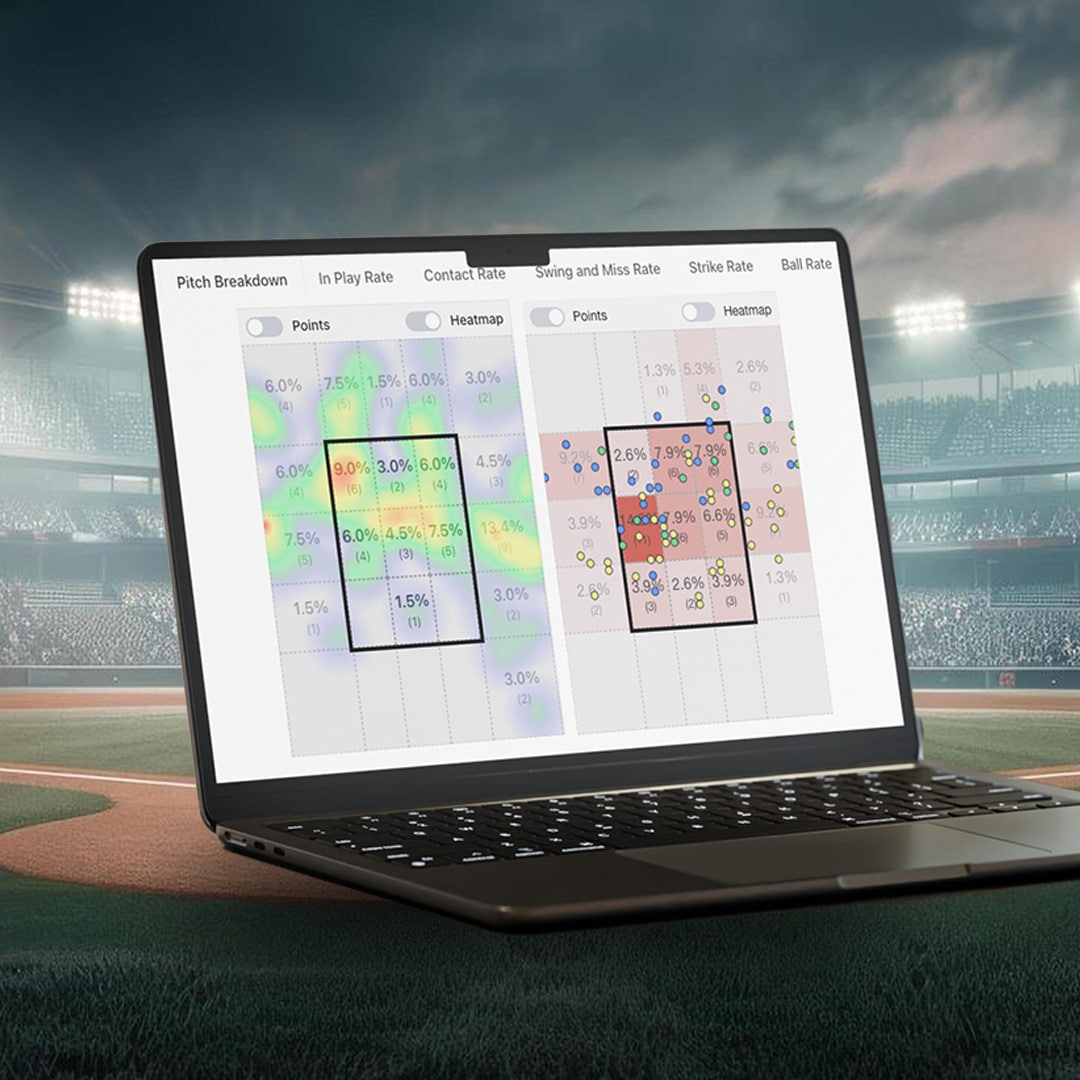
Big-League Analytics in your dugout for free
With GoRout Connect, GoRout Diamond customers receive access to AWRE Sports suite of analytics tools for free!